Why this matters
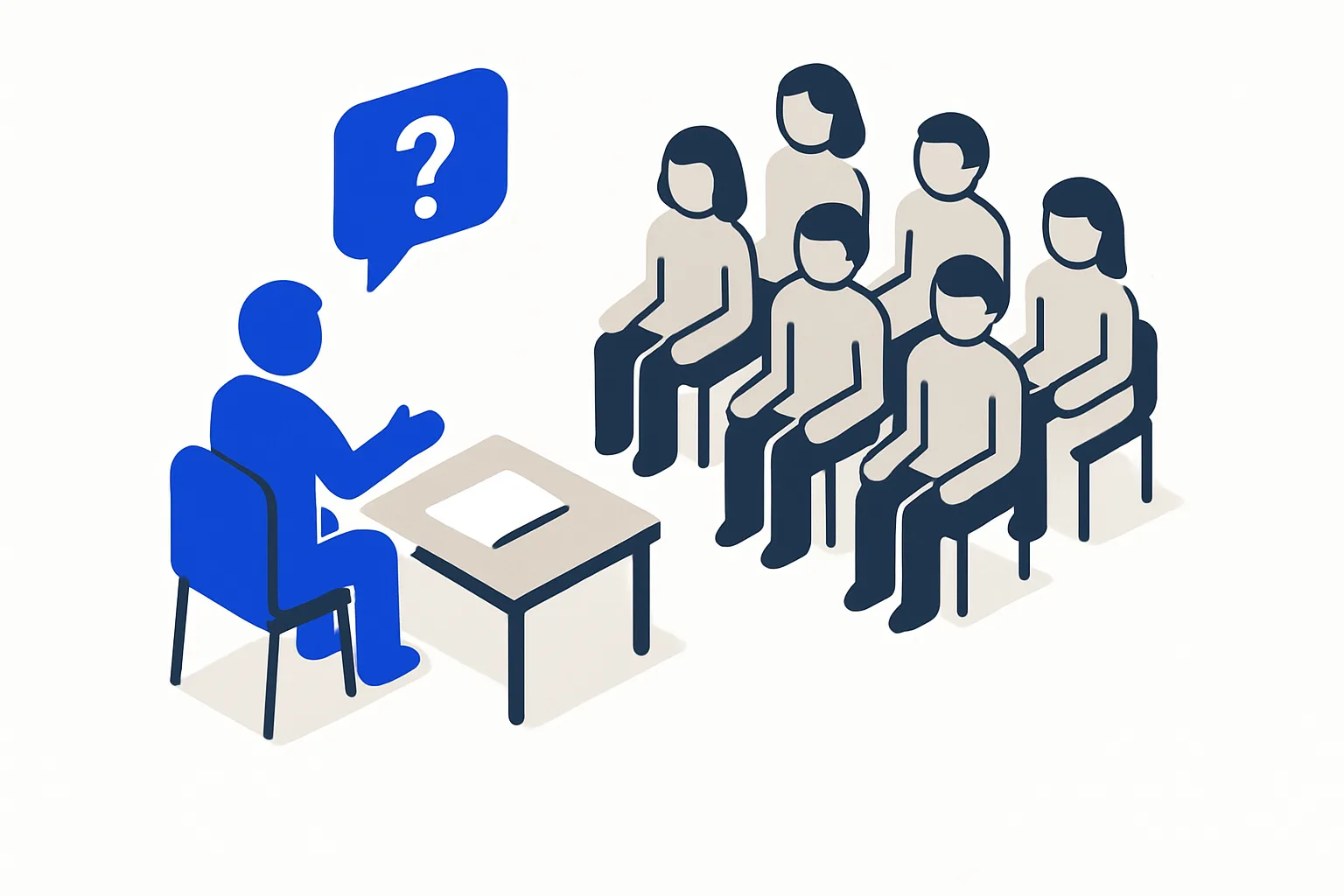
Ten interviews can reveal initial patterns, though they are not a universal threshold. Done right, they tell you the problem's frequency, cost, and current workarounds, and give you the exact words customers use, which later become your best copy. Done wrong, they produce ten polite compliments and false confidence.
What "done" looks like
- 10 completed conversations with people matching your chosen segment
- Structured notes per interview: trigger, frequency, cost, workaround, quote
- Interviews tagged strong / mild / no pain
- A one-page synthesis of what repeated and what surprised you
How to do it
- Recruit where the segment lives, communities, warm intros, cold outreach with a genuine "I'm researching X, not selling" note. Aim for 15 scheduled to get 10 done.
- Follow the discovery script: "Walk me through the last time [trigger] happened" → "What did you do about it?" → "What have you tried?" → "What did that cost you?"
- Never pitch. The moment you present a solution, honest data ends.
- Capture verbatim quotes, customers' own phrasing is gold for landing pages and ads later.
- Synthesize after every 3 to 4 interviews, not just at the end; adjust who you talk to if the segment feels off.
Common mistakes
- Leading questions ("Wouldn't it be great if…") that manufacture agreement
- Only interviewing enthusiasts who agreed instantly, survivors of your own filter
- Collecting stories but never tagging or counting them
Real-world examples
- Rob Fitzpatrick's book "The Mom Test" is the standard reference for this: its core rule is to talk about the customer's life and past behavior, not your idea, the title comes from the fact that even your mom will lie to protect your feelings if you pitch her.
- Steve Blank's customer-discovery work makes the same point, get out of the building and ask how people currently solve the problem, what it costs them, and what happened the last time it came up, instead of asking the useless question "would you buy this?"
- Use these conversations to feed the next steps, like running solution interviews once you're confident you've found a real, painful problem.
From a founder's point of view
The hardest discipline here is keeping your mouth shut about your own idea, because the whole point is to learn whether the problem is real, not to hear people be polite about your solution. Ten honest conversations about how someone actually lives and works will save you months of building the wrong thing. Ask about the past, not hypothetical futures, "what did you do last time" beats "would you use this" every time.
Rule of thumb
You are done listening when you can predict the next interviewee's answers. If that happens before interview ten, the pattern may be strong; if it never happens, the segment or sample may need refinement.