Why this matters
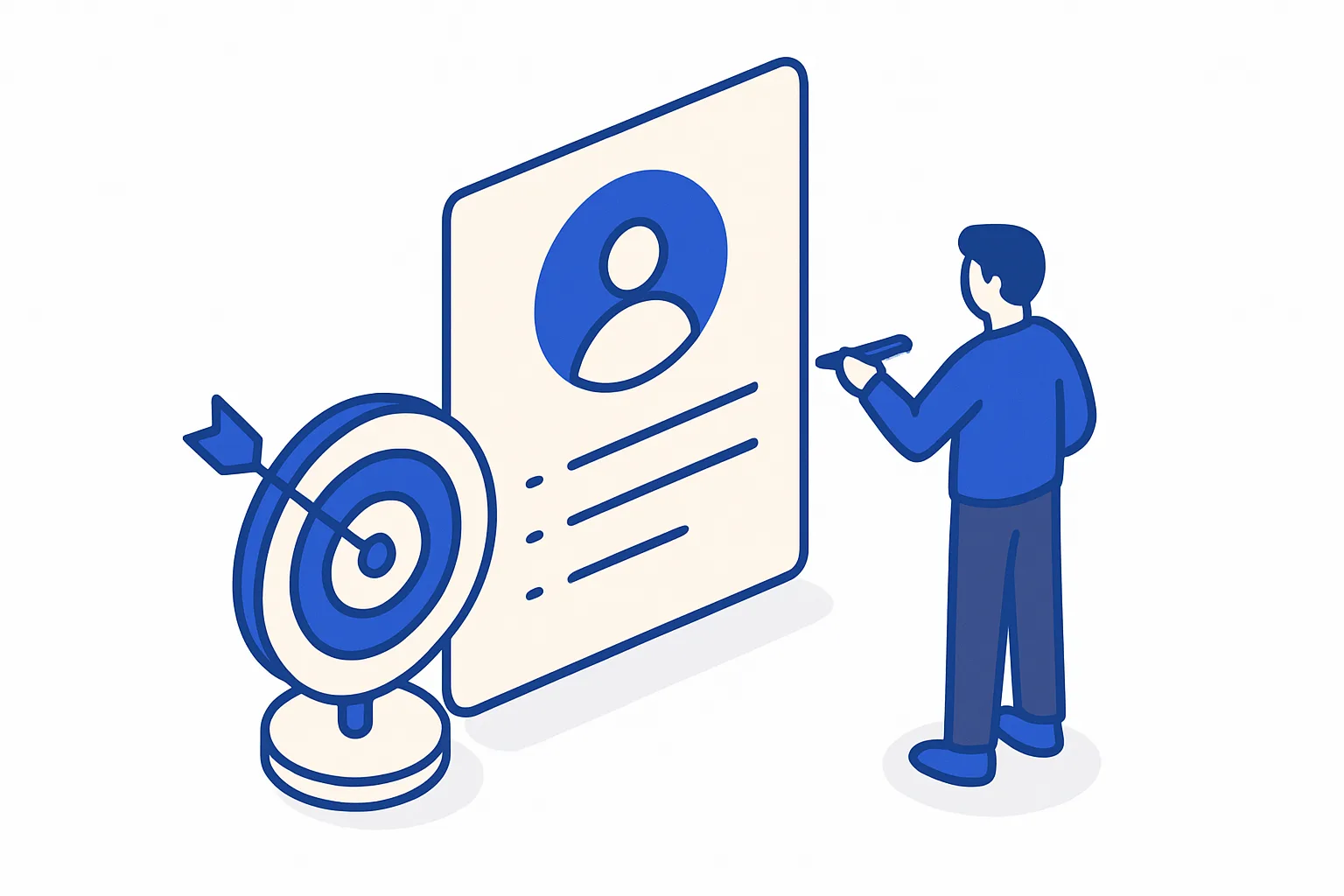
Every decision you make, features, pricing, copy, channels, silently assumes a user. If that user is "everyone," your product speaks to no one. A written persona replaces opinion-based debates with evidence-based decisions, and it is the cheapest alignment tool a founding team has.
What "done" looks like
- One primary persona written down in one page or less
- It names a role and context, not demographics for their own sake
- It states the trigger problem, current workaround, and what "better" is worth to them
- The team refers to it when debating features or copy
How to do it
- Start from the problem, not the person. Write the pain first, then ask who feels it most often and most expensively.
- Base it on real people. Use your interviews; quote actual words. If you have no interviews yet, mark every field as a guess to be tested.
- Fill five fields only: role and context; trigger situation; current workaround; what success looks like; where they look for solutions.
- Pick ONE primary persona. Others go on a "later" list. Serving two masters at MVP stage doubles your work.
- Revisit after every 5 to 10 interviews and edit what proved wrong.
Common mistakes
- Demographic trivia ("34, urban, drinks oat milk") instead of situation and pain
- Persona-by-committee that averages three different users into a fictional nobody
- Writing it once and never updating it with interview evidence
Real-world examples
- The persona technique was popularized by software designer Alan Cooper, who introduced it to a wide audience in his 1999 book The Inmates Are Running the Asylum. His core argument still holds: designing for "the user" in the abstract means designing for no one, so you invent a specific, named stand-in and build for them.
- A useful persona is concrete and constraining: a role, a real problem, a budget, and what they currently do instead. It should be specific enough that some feature ideas are obviously "not for them."
- Personas earn their keep only when grounded in real conversations, not imagination. Build yours off interview 10 potential customers, and if several distinct buyers emerge, split them out with list 3 target customer segments.
From a founder's point of view
A persona feels like busywork until the first hard trade-off, when suddenly "who is this actually for?" is the only question that matters. Writing down one specific target is really a decision about who you're willing to disappoint, which is uncomfortable but clarifying. The danger is inventing a flattering persona that happens to want exactly what you already planned to build. The honest version comes from listening, not wishful thinking.
Rule of thumb
If you cannot name three real people who match your persona, it is a character sketch, not a persona.