What they achieved
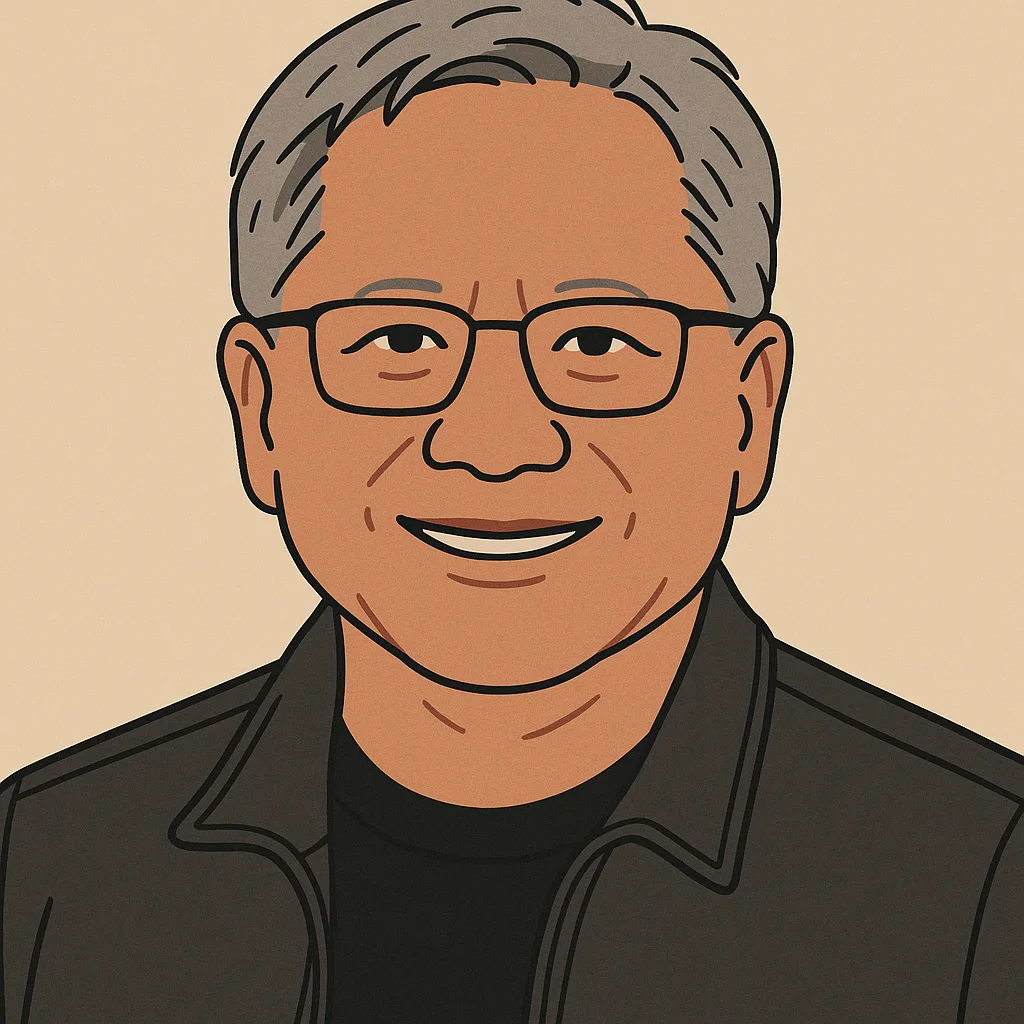
Jensen Huang co-founded NVIDIA in 1993 and has run it for over three decades, turning a graphics-chip startup into one of the most valuable companies on earth. NVIDIA's GPUs became the essential hardware of the AI era, and the company's market cap passed $1 trillion in 2023.
The founding story
Huang, born in Taiwan and raised partly in the US, was a Stanford-trained engineer at LSI Logic and AMD. In 1993, he and two colleagues, Chris Malachowsky and Curtis Priem, reportedly hatched NVIDIA over coffee at a Denny's near San Jose. Their bet: dedicated graphics processors would matter enormously as PCs became multimedia machines.
Overview
NVIDIA nearly failed early, but the RIVA and later GeForce lines established it in gaming graphics. The pivotal move came in 2006 with CUDA, a platform that let developers use GPUs for general computing. That decision positioned NVIDIA to dominate deep learning a decade later, when neural networks turned out to run efficiently on parallel GPU hardware.
Analysis
Huang's defining trait is long-horizon conviction. He invested in CUDA for years before the payoff was obvious, absorbing costs and skepticism. He built not just chips but a software ecosystem that locked in developers. He also survived multiple near-death moments, keeping the company alive long enough for its bets to compound.
What they did well
He picked a durable technical trend and stayed on it for decades. He invested ahead of demand in a software platform that became a moat. And he cultivated a demanding, fast-moving culture while maintaining unusual founder-CEO continuity.
What it means for you
Conviction plus patience can beat cleverness. If you see a real technical shift, commit to it before it's consensus, and build the ecosystem, not just the product, so switching away from you gets harder. Longevity matters: staying in the game lets your early bets compound.
Caveats
NVIDIA's ascent rode enormous tailwinds: gaming, crypto, then the AI explosion, that no founder can manufacture. Timing and luck were real. The CUDA bet could easily have failed. Most startups that persist for 30 years still don't become trillion-dollar companies, so this is a survivorship story as much as a strategy one.
Conclusion
Huang shows the power of committing to a technological thesis and building both hardware and software around it for the long haul. Copy the discipline and patience, not the specific bet, and remember that the payoff owed as much to timing as to vision.