What they achieved
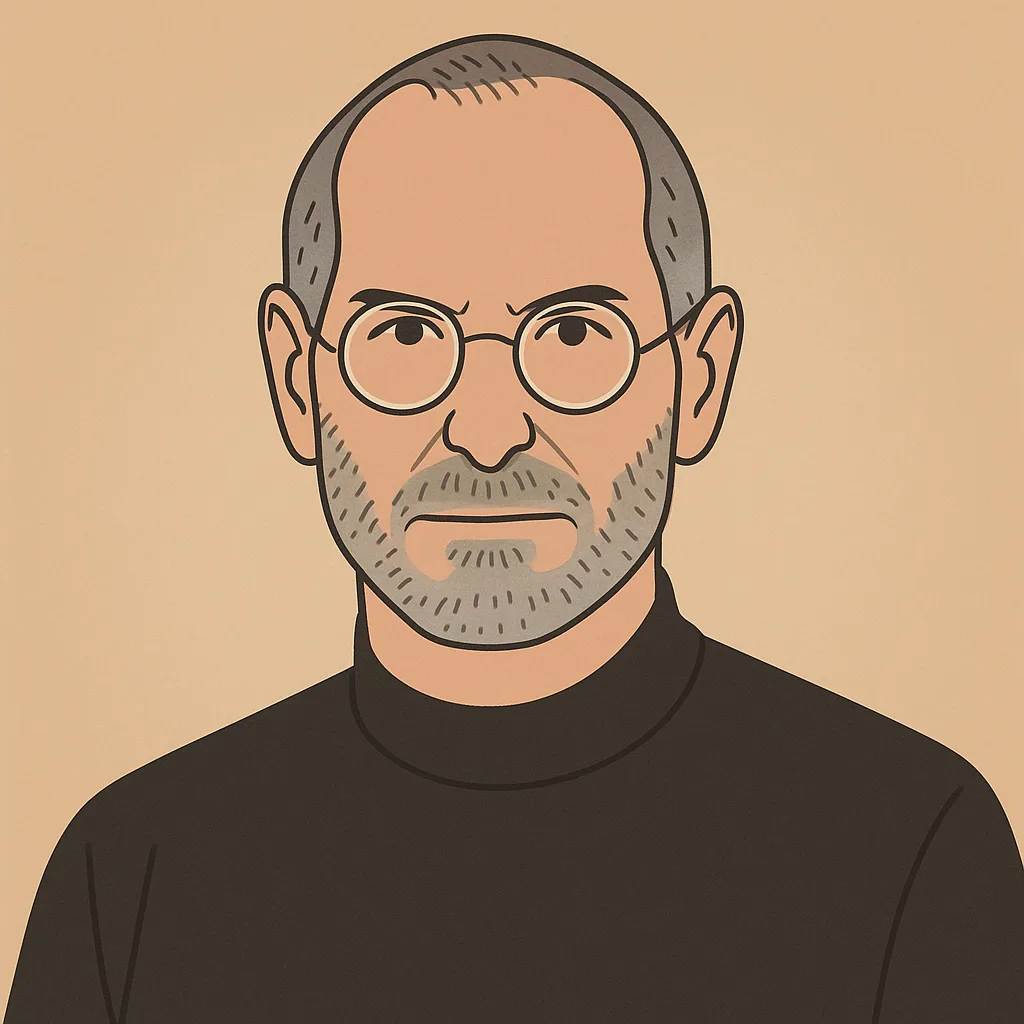
Steve Jobs co-founded Apple in 1976 and, after being pushed out and returning, transformed it from a company weeks from bankruptcy into a global icon. The iPod, iPhone, and iPad redefined entire industries and made Apple the world's most valuable company after his death.
The founding story
Jobs and engineer Steve Wozniak started Apple on April 1, 1976, and used the Jobs family garage in Los Altos in the company's early days. The Apple II (1977) made them a real business; the Macintosh (1984) introduced the graphical interface to the mass market. In 1985, after clashes with the board and CEO John Sculley, Jobs was forced out of the company he founded.
Overview
Exiled, Jobs founded NeXT and bought the computer-graphics group that became Pixar, which produced Toy Story (1995). Apple acquired NeXT in 1997, bringing Jobs back. As CEO he cut the product line, launched the iMac, and then the iPod (2001), iTunes Store, iPhone (2007), and iPad (2010). He resigned as CEO in August 2011 and died that October.
Analysis
Jobs's edge was not invention but integration and taste: pairing hardware, software, and retail into a single experience, and saying no to almost everything. He obsessed over details competitors ignored and repeatedly bet the company on a small number of products. His return proved that focus and a clear point of view can beat a broad, unfocused catalog.
What they did well
Relentless focus, insistence on end-to-end control of the user experience, and a gift for narrative and product launches. He hired and pushed exceptional people, and he was willing to cannibalize his own hits (the iPhone undercut the iPod).
What it means for you
You don't need to invent a category to win it, you need to make the whole experience obviously better and cut everything that dilutes it. Focus on a few things done superbly. And a founder's first failure isn't final: Jobs's most important work came after being fired.
Caveats
Jobs is a survivorship-bias magnet. His abrasive management, reality-distortion pressure, and secrecy caused real harm and would sink most founders. He also had rare timing, elite co-founders, and second and third chances few get. Copy the focus and craft, not the cruelty or the myth of the lone genius.
Conclusion
Jobs's story is about focus, taste, and resilience, and about a comeback that reshaped modern technology. Learn the discipline behind the legend, not the caricature of the difficult visionary.