Why this matters
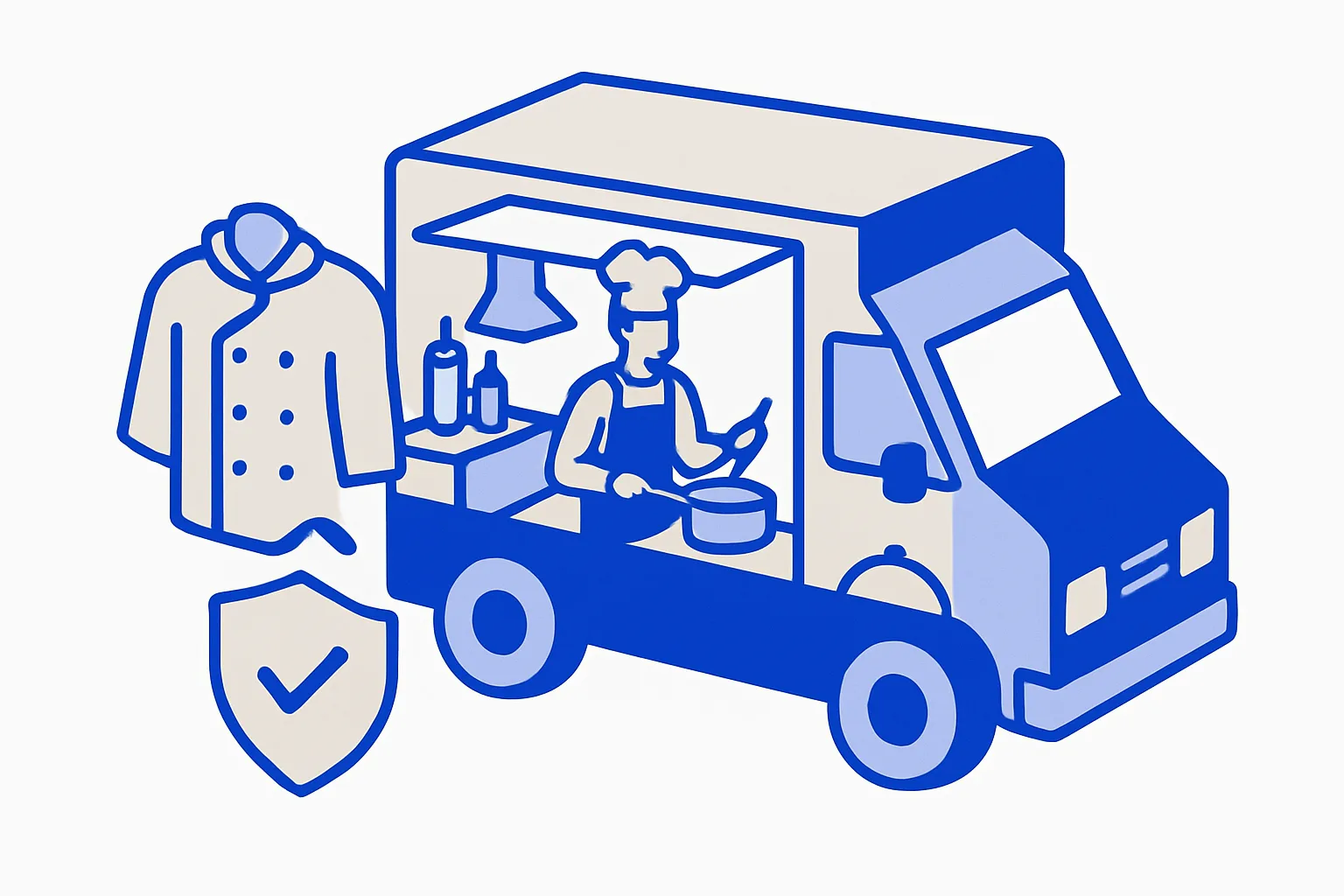
A food truck is a full commercial kitchen compressed into roughly 60 square feet that also has to survive the road. Every inch and every amp is contested, and mistakes are expensive twice: equipment that doesn't fit or can't be powered, and a build that fails health or fire inspection and keeps you parked. Design the truck around your menu, not the other way round.
What "done" looks like
- Every menu item can be prepped, cooked, held, and served from the truck at rush pace
- The build passes health department and fire inspections in your operating area
- Power, propane, fresh and grey water, and refrigeration last a full service day
- Two people can work a rush without crossing paths
How to do it
- Lock your menu first, then list every station it needs. A focused menu of 5 to 8 items is what fits in a truck at speed.
- Get your health department's mobile-unit spec sheet before building. Requirements (sink counts, tank sizes, hood specs) vary by county and force late redesigns.
- Map the workflow: cold storage → prep → cookline → holding → service window, minimizing crossovers.
- Size power and propane for peak load plus margin. Add up every appliance's draw; an undersized generator dies mid-rush. Budget realistically: a full build-out can range from $30k to more than $100k including the vehicle, but vehicle, location, equipment, and code requirements can change costs substantially.
- Run a full mock service in the truck. Cook the whole menu at pace, on truck power, before your first event.
Common mistakes
- Building the kitchen before confirming local code, then paying to retrofit sinks and tanks
- Overloading the menu so the line needs more stations than the truck has
- Skimping on the generator, the single most common day-killer at events
Real-world examples
- Adopted local fire codes commonly require trucks with qualifying cooking equipment, such as fryers, grills, or open flames, to have a UL-300 automatic wet-chemical fire suppression system over the cook line plus a Type I grease hood. Confirm the requirements with your local fire authority before building.
- Most jurisdictions also require trucks to operate out of a licensed commissary or commercial kitchen for prep, water, and waste, which is why the build-out has to match the menu you actually plan to cook rather than the truck you happened to buy.
- The practical pattern: fit the kitchen to the menu, not the other way around. Founders who lock the menu first (see choose your concept and menu) avoid paying twice for equipment that never fits the layout. Coordinate this with buy or lease your truck and get food service licenses.
From a founder's point of view
The truck kitchen is where romantic menu ideas meet the reality of a fire marshal and a few square feet of counter. It is tempting to buy the shiny equipment first, but the trucks that pass inspection on the first try are the ones where the menu, the hood, the suppression system, and the commissary plan were decided together. Cutting a corner here doesn't save money. It just moves the cost to a failed inspection right before opening day.
Rule of thumb
If you can't serve your busiest hour entirely from inside the truck, power, water, and all, the build isn't done, no matter how good it looks.