Why this matters
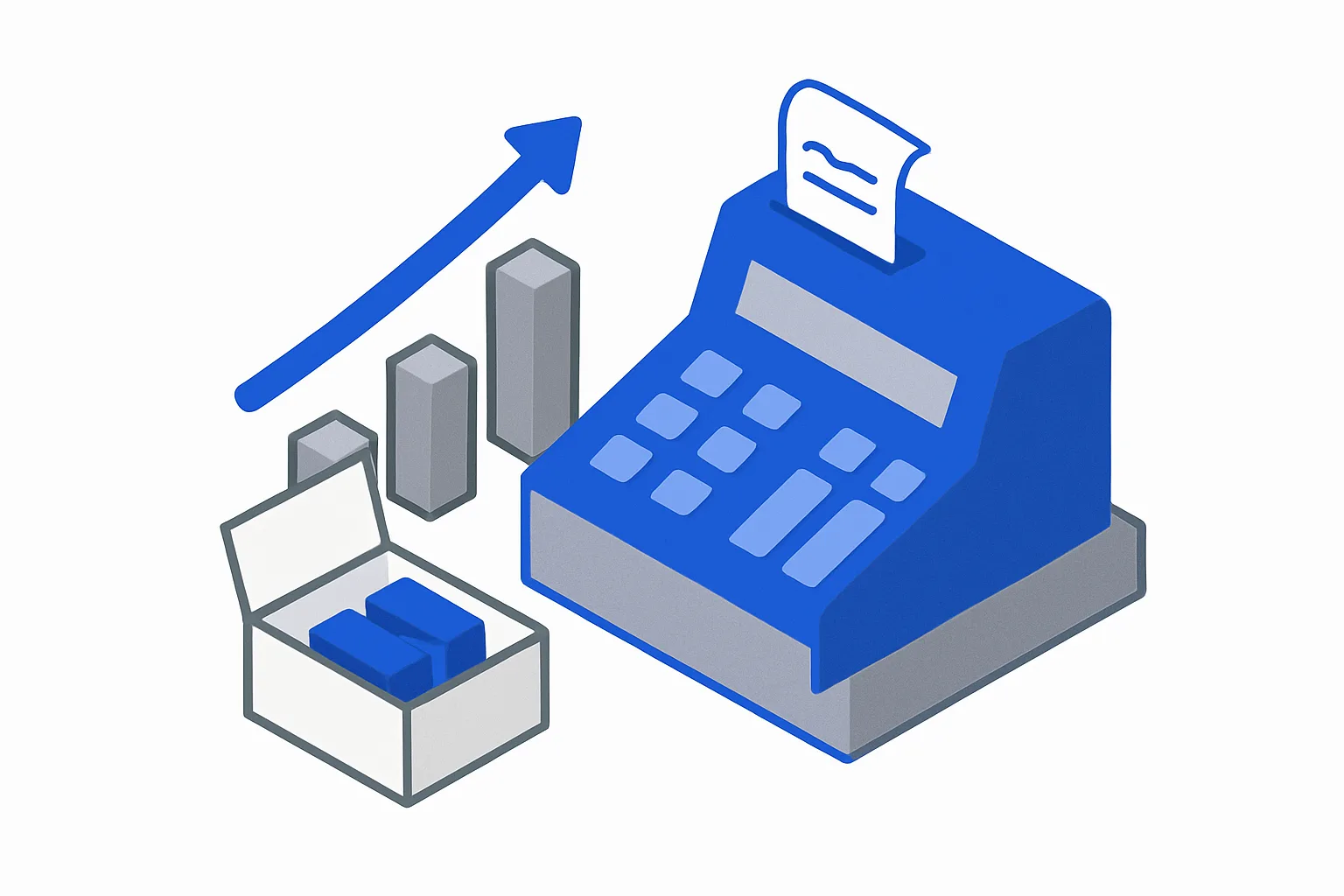
The register is the one place every paying customer stands still with their wallet already out. A small, well-chosen item there adds a few dollars to many transactions with little or no additional marketing spend. A bare counter, or one buried in flyers, wastes the highest-intent square foot in the store.
What "done" looks like
- The checkout area holds one to three small, inexpensive items that are easy to grab
- Each is priced under an impulse threshold (often under $10) and clearly tagged
- The items need no explanation and no size or color decision
- Staff have one optional one-liner that doesn't slow the line
How to do it
- Pick no-deliberation items: consumables, add-ons, or refills related to what people already buy.
- Price for a reflex, a small number relative to the average basket, marked in big type.
- Place items within arm's reach of where customers wait, at counter height.
- Write the one-liner ("Want batteries for that?") and use it only when natural.
- Rotate monthly: count how many transactions include a counter item, drop losers, keep winners.
Common mistakes
- Stocking items that need explanation, sizing, or comparison, deliberation kills the reflex
- Crowding the register with ten options until it reads as a junk drawer
- Pushing the upsell verbally on every customer, souring the visit's last moment
Real-world examples
- Chains like Walmart, Target, and Kroger have kept candy and single-serve items at registers for decades, checkout placement for impulse goods is among retail's most standardized practices.
- CNN, citing market research firm IRI, reported that US shoppers spent about $6 billion a year in store checkout areas; beyond candy, common register winners include batteries, gift cards, and hand sanitizer.
From a founder's point of view
The register upsell is the politest sale there is: the customer has already said yes to the store, and the counter simply offers one small, obviously useful thing. Done right, it feels like a favor, not a pitch.
Rule of thumb
A good register item passes the three-second test: seen, understood, and added to the pile before the card reader beeps.