Why this matters
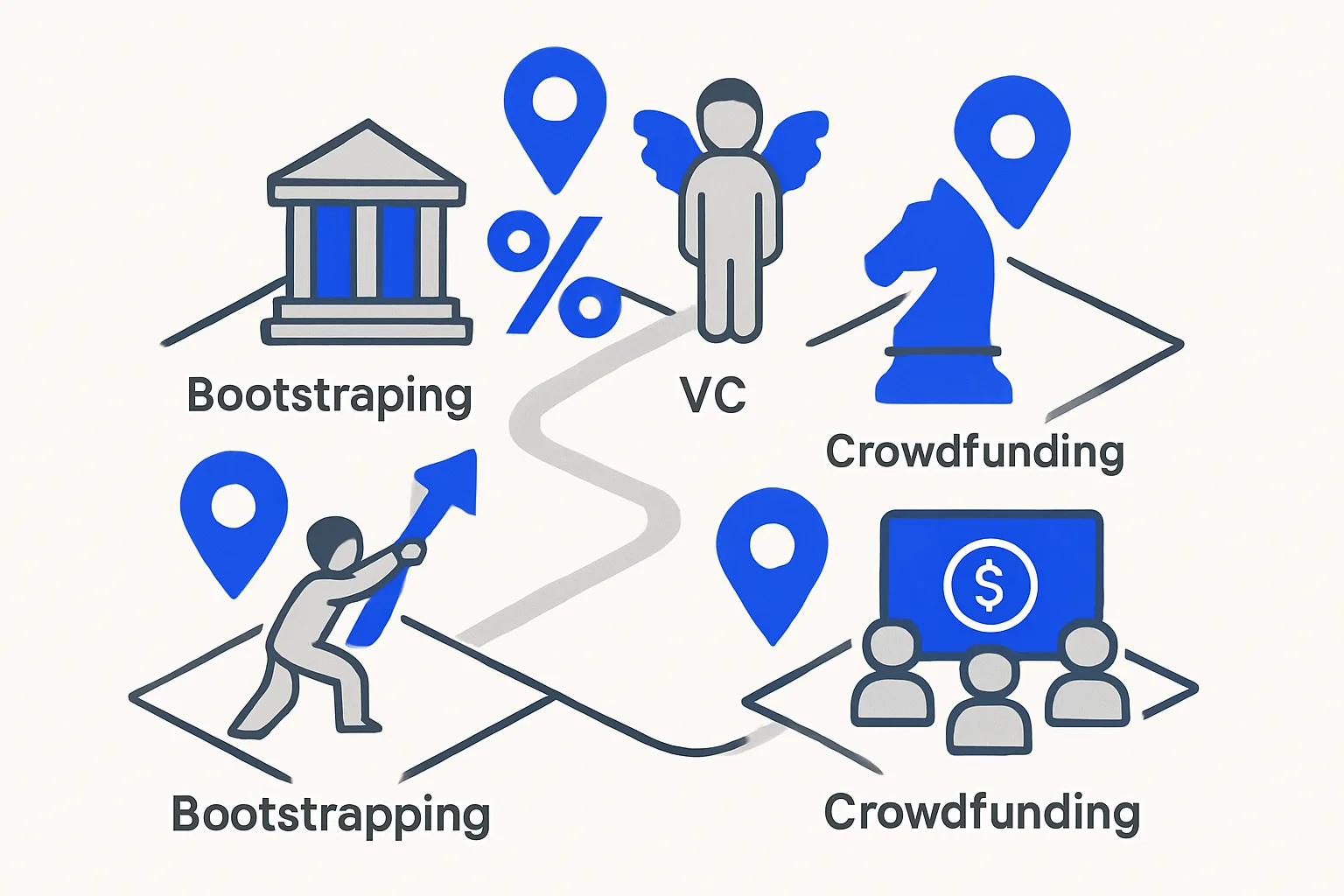
Bootstrapping, loans, angels, VC, and crowdfunding aren't interchangeable pots of money, they're different games with different rules and referees. Pitching the wrong source wastes months.
What "done" looks like
- You can explain each major option in one sentence
- You know typical check sizes and what each source demands in return
- You've matched your business model to the one or two realistic options
- You know which option you'll pursue first, and why
How to do it
- Start with bootstrapping as the default. Customer revenue is the only money with no strings.
- Price out debt. SBA 7(a) loans run up to $5 million; you keep all equity but repay on schedule, usually with a personal guarantee.
- Understand angels: individuals writing checks that can range from thousands to hundreds of thousands of dollars, usually on SAFEs or notes.
- Understand VC: institutional money that needs very large outcomes and assumes multiple future rounds.
- Look at crowdfunding: rewards-based (Kickstarter) pre-sells a product; equity crowdfunding (Reg CF) sells small stakes to many backers.
- Match to your model: steady cash flow suits debt; a huge market plus a need for speed suits equity.
Common mistakes
- Pitching VCs with a healthy lifestyle business, wrong audience, not wrong business
- Avoiding debt because equity "feels safer"; if you succeed, equity was the most expensive money available
- Launching rewards crowdfunding without pricing fulfillment costs
Real-world examples
- The SBA 7(a) program is the most common US government-backed small-business loan, capped at $5 million.
- Oculus raised $2.4M on Kickstarter in 2012 against a $250K goal.
- Y Combinator's standard deal is $500K: $125K for 7% plus $375K on an uncapped MFN SAFE.
From a founder's point of view
Choosing a funding source is choosing a partner whose incentives shape every decision after the wire hits. A lender wants you steady, a VC wants you enormous, and a Kickstarter backer wants the thing shipped. Pick the pressure you can live with.
Rule of thumb
If you can't name what a funding source demands in return, you don't understand that option yet.