Why this matters
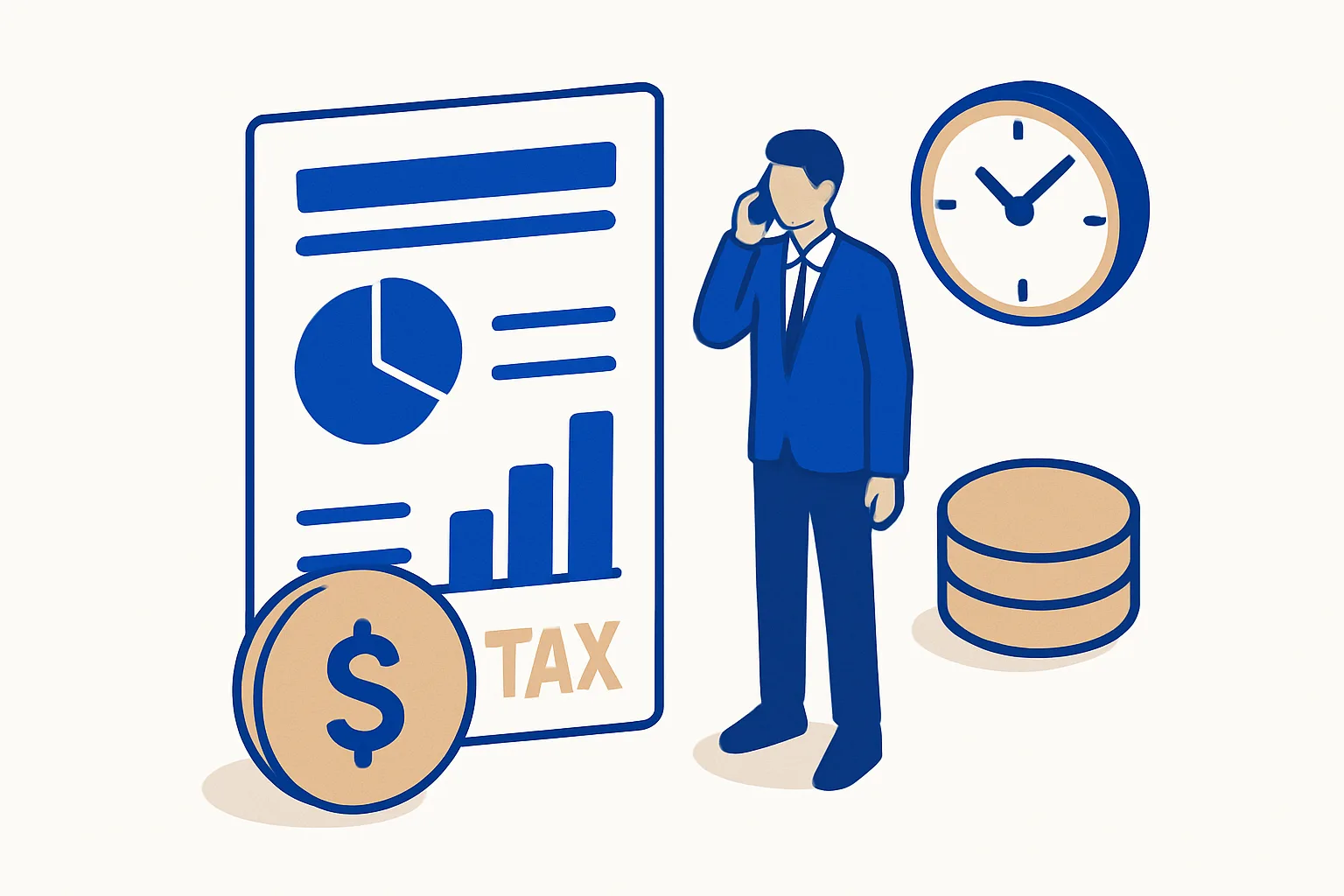
Meeting your accountant once a year means every problem is discovered after it's expensive: misclassifications compounding, estimates drifting from actual income, decisions made without tax input. A standing 30-minute quarterly call catches all of it while correction is still cheap.
What "done" looks like
- A recurring quarterly invite, about 30 minutes, booked a year out
- A standing agenda both sides know
- Books reconciled before each call
- Each call ends with a confirmed estimated payment and owned action items
How to do it
- Book all four calls now as recurring invites, timing each shortly before an estimated-payment due date makes it immediately actionable.
- Fix a four-item agenda: P&L and cash vs. last quarter; anything odd in the books; estimated-payment adjustment; decisions ahead.
- Close the books first, send reconciled numbers a few days ahead; reviewing stale books is theater.
- Bring the decisions-ahead list, the call's highest-value output is tax input before you commit, not after.
- End with numbers: the next estimated payment and who does what by when.
Common mistakes
- Cancelling the call because "nothing happened", drift is invisible precisely then
- Spending the 30 minutes fixing bookkeeping instead of reviewing finished books
- Never adjusting estimates, then incurring an underpayment penalty or a giant April bill
Real-world examples
- The IRS underpayment penalty works like interest, the federal short-term rate plus 3 percentage points, reset quarterly, so underpaying quietly accrues cost all year.
- This cadence aligns with estimated-tax deadlines, so many firms offer quarterly advisory services.
- Safe-harbor rules, generally paying 100% of last year's tax, or 110% at higher incomes, are a standard agenda topic.
From a founder's point of view
The quarterly call is cheap insurance against compounding. Thirty minutes with closed books beats three hours in April with open questions.
Rule of thumb
Four calls a year, booked in advance, books closed before each one. If a quarter passed without a call, assume something drifted.