Why this matters
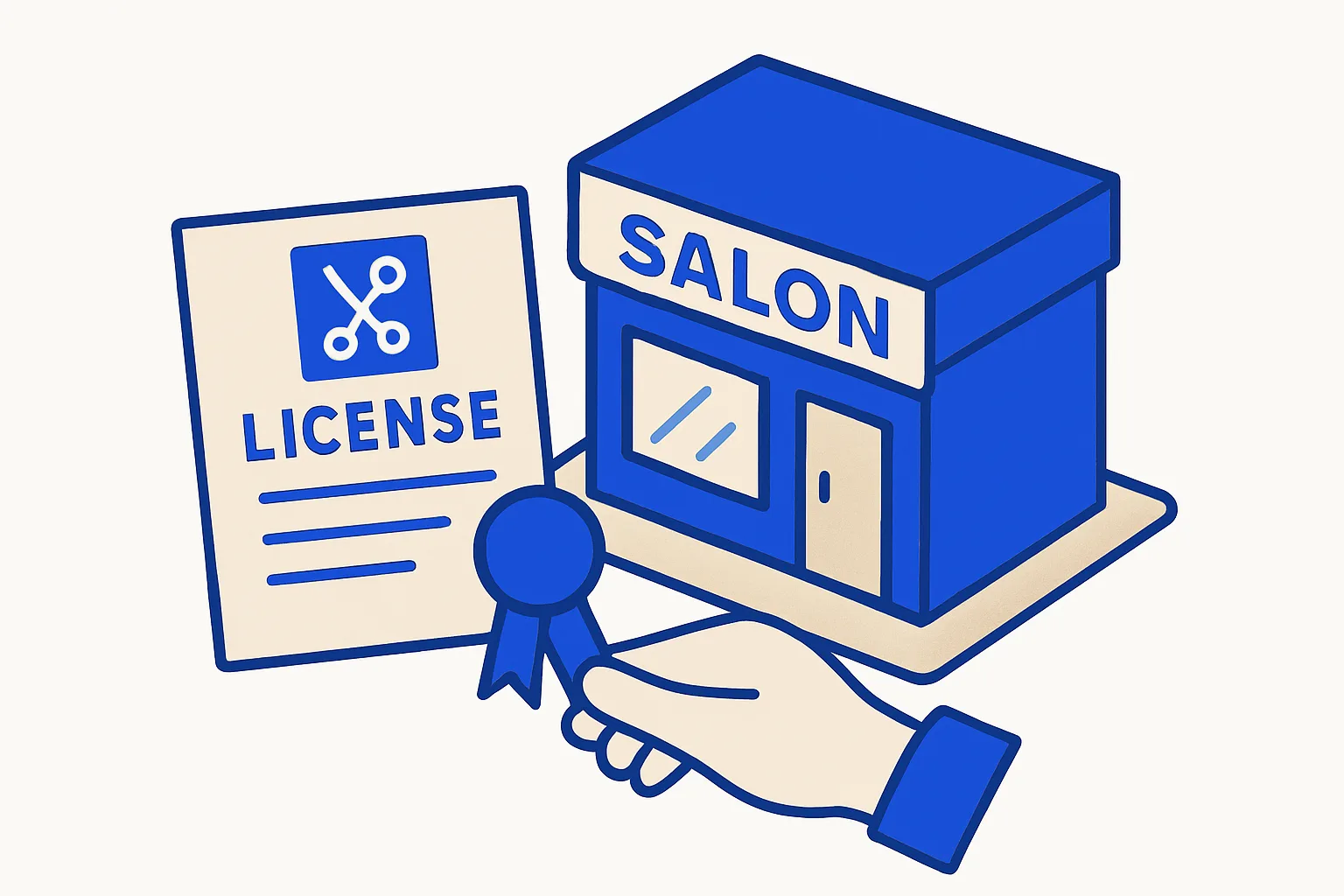
A licensed cosmetologist may not legally cut hair in an unlicensed shop. The establishment license covers the premises and is separate from any stylist's personal license. Opening without it risks fines and a shutdown.
What "done" looks like
- The establishment license is approved for your address
- Any required inspection has passed or is scheduled
- The license is posted in public view at the salon
- Everyone working the floor holds a current individual license
How to do it
- Identify your licensing agency, usually the state board of cosmetology (TDLR in Texas; the Board of Barbering and Cosmetology in California).
- Read the establishment requirements before build-out: equipment, plumbing, and sanitation rules are cheaper to meet before construction.
- Apply with the fee for your location, the license attaches to the address, so a move means a new application.
- Prepare for inspection: labeled disinfectants, clean stations, and every practitioner's license displayed.
- Post the license where clients can see it, and calendar the renewal date.
Common mistakes
- Assuming your personal cosmetology license covers the business, states license the person and the premises separately
- Signing a lease before checking the space against equipment and plumbing requirements
- Letting a booth renter work without verifying their license, that can put your establishment license at risk
Real-world examples
- Texas requires a TDLR establishment license for the salon itself, and cosmetologists may only work in a licensed establishment, owners need it even if they never touch shears
- Inspection requirements vary by state and commonly include licensing, sanitation, facilities, and equipment
From a founder's point of view
The establishment license is where the state stops caring about your skills and starts caring about your premises. Reading the requirements before build-out turns an inspection into a formality instead of a renovation.
Rule of thumb
One license for every head that cuts, one for the roof over them. If the roof's license is not on the wall, you are not open.