Why this matters
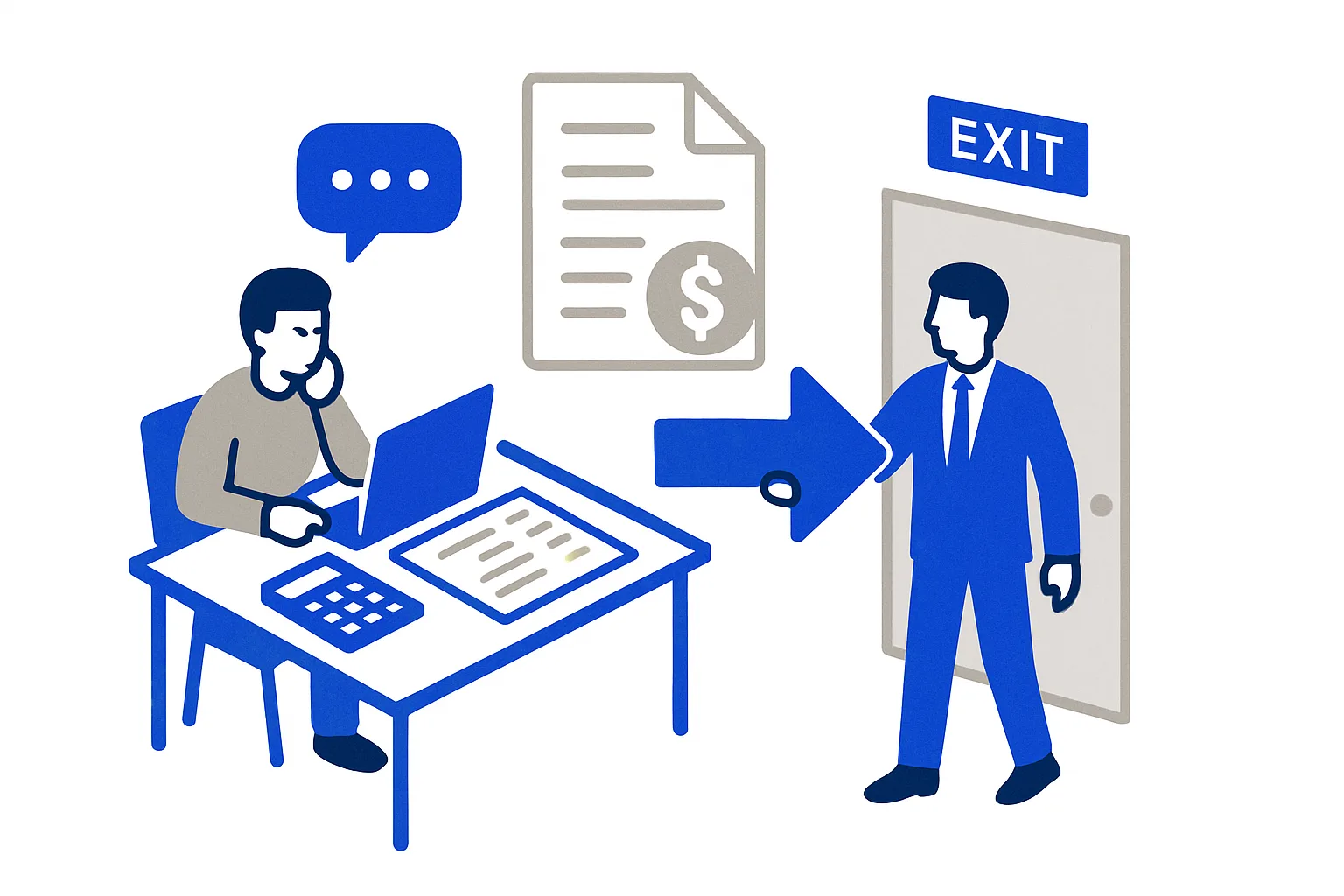
A bad accountant relationship fails quietly: replies slow down, bills grow, advice never comes, and you absorb it because switching feels disruptive. But you carry the penalties for missed deadlines and the cost of unmade planning moves. An orderly switch is far cheaper than loyalty to a firm that has deprioritized you.
What "done" looks like
- Exit signals named and reviewed once a year
- Current copies of returns, ledger, and records in your hands, not just the firm's
- Old authorizations revoked; software and portal access updated after any switch
How to do it
- Name the signals: repeated slow replies, surprise bills, missed deadlines, zero proactive advice, errors you catch.
- Raise it once, directly. A good firm course-corrects; a shrug is your answer.
- Collect your records first, filed returns, general ledger, depreciation schedules, payroll, before terminating.
- Time the switch outside filing season, a May-to-November handoff is clean.
- Engage the new firm first, the incoming accountant typically requests records from the outgoing one.
- Revoke old authorizations, IRS Forms 2848 and 8821, plus software and bank access.
Common mistakes
- Switching in March, mid-filing, with nobody clearly responsible for the return
- Terminating before you have your records, then negotiating from weakness
- Staying because "they know our books", that knowledge lives in records you're entitled to
Real-world examples
- Bench, a large online bookkeeping service, shut down abruptly in December 2024, temporarily locking customers out of their books, a widely covered lesson in keeping your own copies.
- IRS authorizations (Forms 2848 and 8821) stay in force until withdrawn or superseded, revoking them is a standard switching step.
- Depending on the jurisdiction and record type, professional ethics rules may require CPAs to return client-provided records on request, even during fee disputes. Check the applicable state board rules.
From a founder's point of view
The switching cost is mostly imaginary once you hold your own records; the staying cost is real and compounds. Don't let your accountant be the only holder of your history.
Rule of thumb
Two quarters of slow replies or one surprise bill without a scope conversation: start the search. Keep copies of everything so leaving stays cheap.