Why this matters
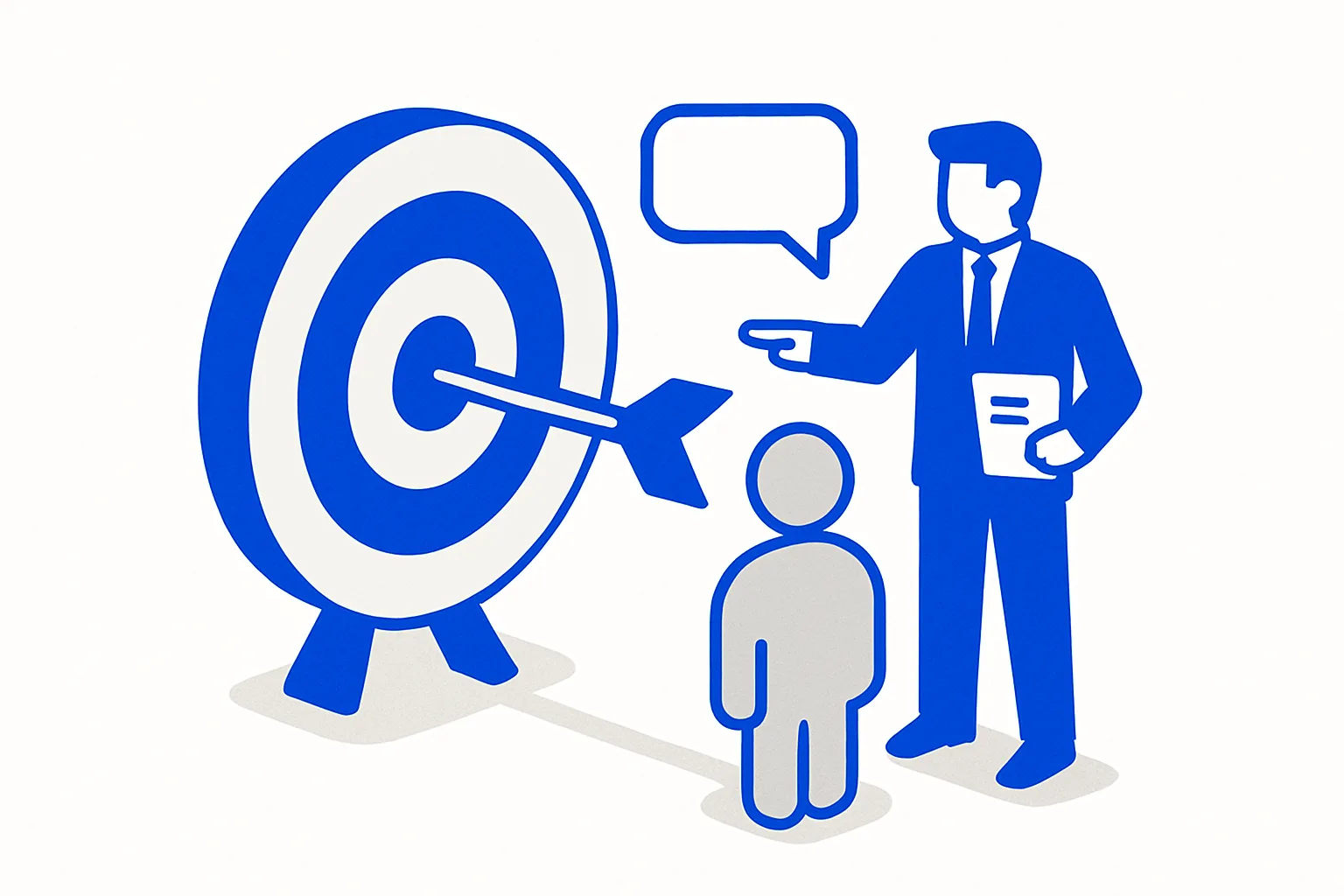
Marketing aimed at everyone is ignored by everyone. Every later step in this checklist, your core message, your two channels, your content, gets easier and cheaper once you can describe one specific person with one urgent problem. Vague targeting is expensive because you pay for it in every ad and every post.
What "done" looks like
- You can describe one customer in a sentence: who they are, what they want, what's in the way
- You know where this person already spends time and attention
- You've talked to at least three real people who fit the description
- New marketing ideas get tested against whether this person would care
How to do it
- Start from your best existing customers (or, pre-launch, the people who showed real interest): why did they buy?
- Write one sentence: a specific person, trying to reach a goal, blocked by a problem you solve.
- Interview three of them for 15 minutes each. Ask what they tried before you and what words they use for the problem.
- Steal their vocabulary. The words customers use for the problem become your headlines.
- Post the sentence where you plan, it's the filter for every channel and campaign decision that follows.
Common mistakes
- Defining the customer by demographics alone instead of by problem and situation
- Picking an aspirational customer you have no access to instead of the one already buying
- Never talking to a real person, a persona built from imagination is fiction
Real-world examples
- Facebook launched for Harvard students only, then expanded college by college, a deliberately narrow first customer that made the message obvious.
- Amazon began by selling only books, proving its model on one category before expanding.
From a founder's point of view
Choosing one customer feels like turning others away, but the people outside the target are less likely to buy right now, they just made the message mushy. Specificity is what makes a small budget work like a bigger one.
Rule of thumb
If your description fits a stranger you could pick out of a crowd, and you know where that crowd gathers, you've named your customer.