Why this matters
A food truck's superpower, mobility, is also its biggest risk: customers can't come back if they don't know where you are. Your schedule post is not marketing fluff; it's the map to your revenue. A reliable weekly schedule turns one-time festival customers into regulars who plan lunch around you; trucks that go quiet leave sales sitting in the feed.
What "done" looks like
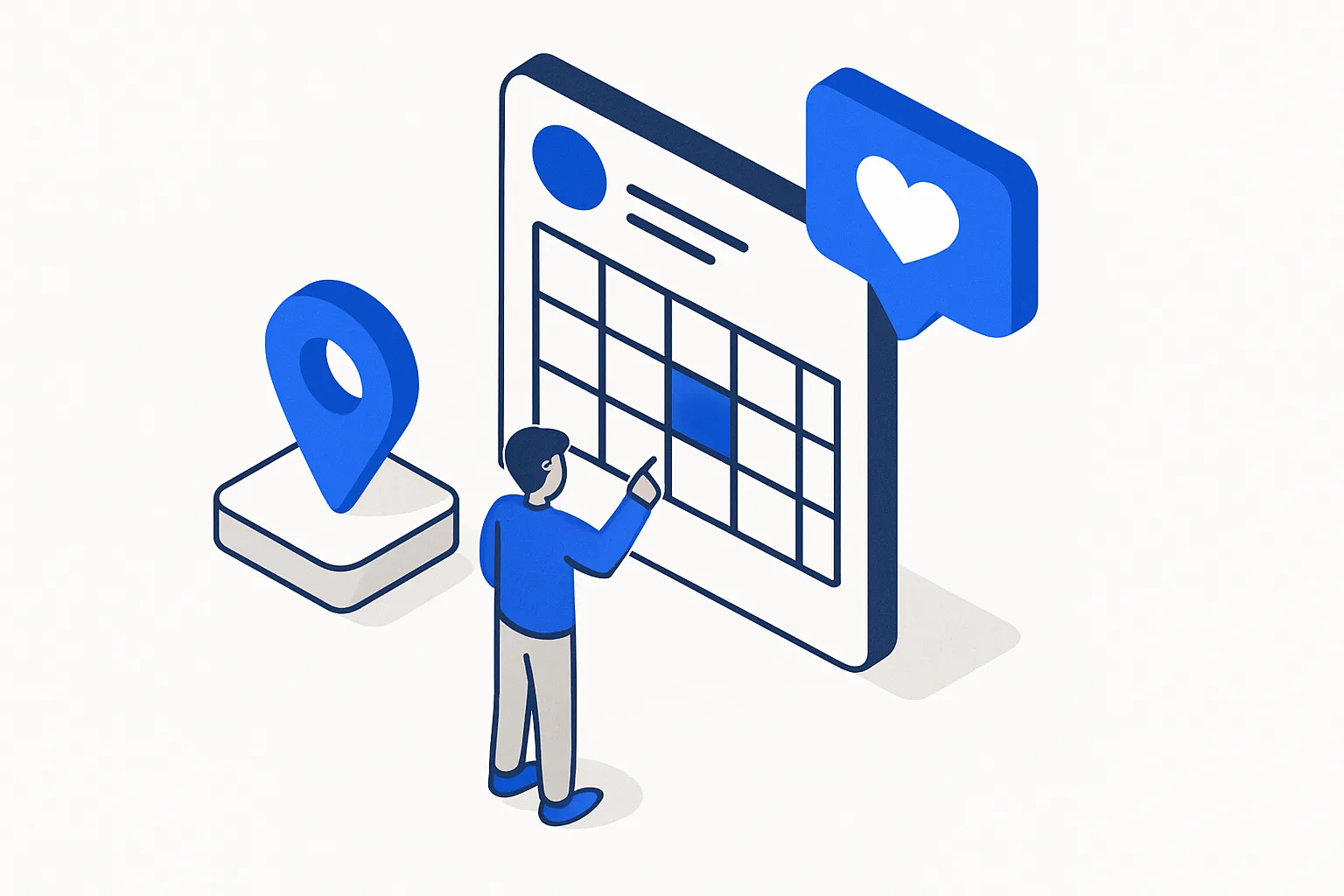
- A schedule graphic or post goes out the same day every week (Sunday or Monday works well)
- It lists each day's location, hours, and a landmark or address people can navigate to
- Daily "we're here" posts or stories go up when you open the window
- Changes and cancellations are posted the moment you know, not after people show up
How to do it
- Lock your week by a fixed day, finalize spots by Sunday so the schedule can go out before Monday lunch decisions happen.
- Make a reusable template in a free design tool: truck name, logo, days down the side, locations and times filled in, ten minutes a week once built.
- Post it everywhere at once, Instagram feed and story, Facebook, and any local truck-tracker app your city uses.
- Tag locations and partners. Tagging the brewery, market, or business park hosting you can expose the truck to relevant local audiences.
- Post live when you open: a photo of the truck on site with a "here until 2pm" beats any graphic for same-day traffic.
Common mistakes
- Posting sporadically, so followers learn they can't rely on you and stop checking
- Vague locations ("downtown!") that cost customers ten minutes of circling
- Going silent when plans change, an empty corner where you promised to be burns trust fastest
Real-world examples
- Kogi BBQ, the Los Angeles Korean-taco truck launched by Roy Choi in 2008, used Twitter and other social media to announce each day's stops, which was central to its early growth. Fans followed the account, and crowds formed wherever the truck posted it would be.
- That model is now standard practice for mobile and pop-up businesses: a consistent weekly post (same format, same day) telling followers exactly where and when to find you is what turns a wandering truck into a route with regulars.
- Reinforce the habit across channels, keep your stops current on set up your Google Business Profile and plan the route itself in scout locations and events.
From a founder's point of view
A mobile business lives or dies on whether people can find it, and a schedule only builds a following if it's predictable. Posting where you'll be every week, in the same place, in the same rhythm, trains customers to check for you, which is worth far more than any single viral post. The trucks that struggle usually aren't bad at cooking; they're just hard to locate two weeks in a row.
Rule of thumb
A regular should be able to answer "where's the truck on Thursday?" in ten seconds using only their phone. If they can't, you didn't post a schedule, you posted a photo.