Why this matters
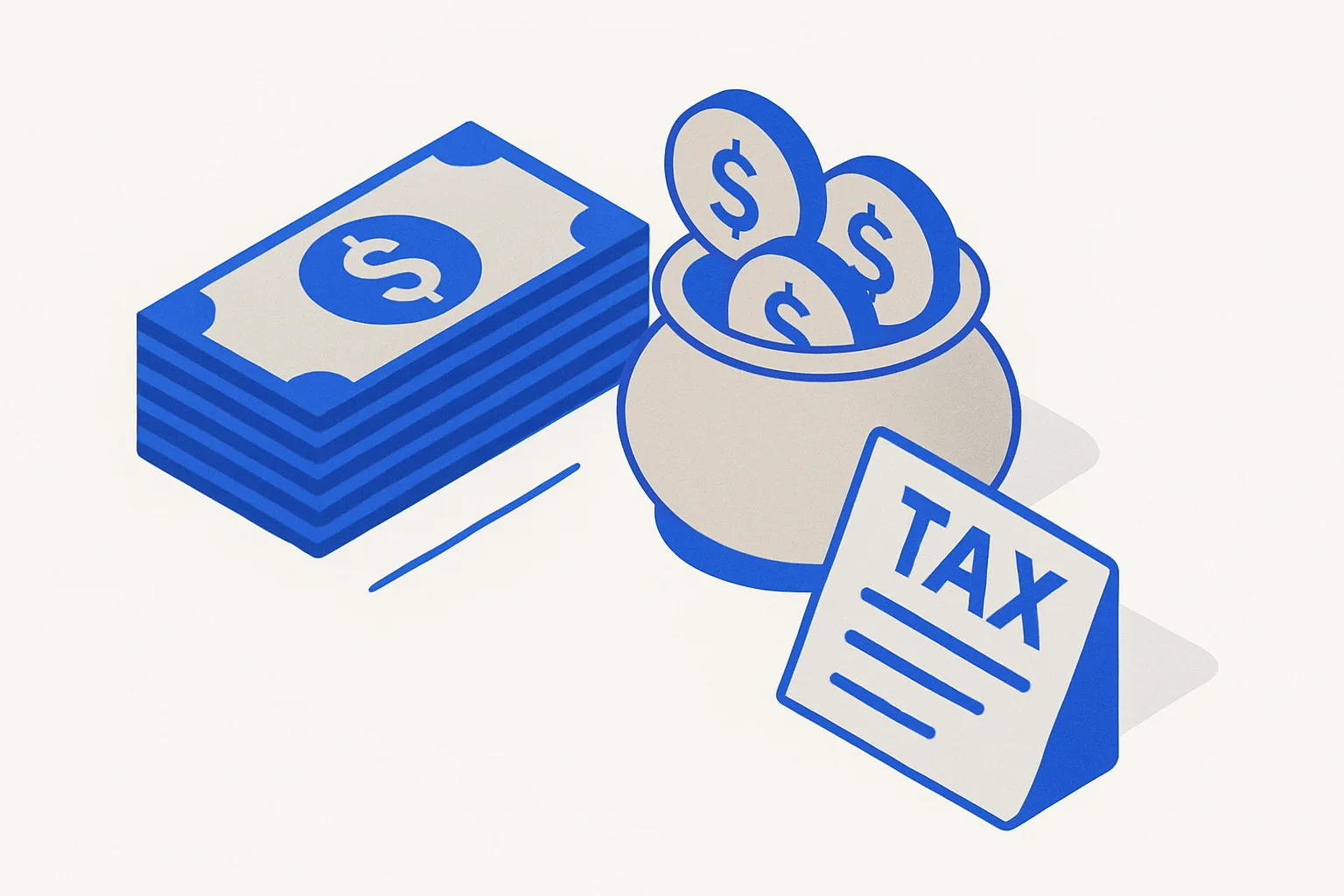
Nobody withholds taxes from your invoices. That's now your job. The classic first-year disaster is spending everything that lands in your account, then meeting a tax bill of thousands with nothing saved. It can cause severe cash-flow stress for businesses that were otherwise working. A fixed, automatic set-aside makes taxes a routine expense instead of an annual emergency.
What "done" looks like
- A separate savings account exists that is only for taxes
- A fixed percentage of every payment moves there within days of arriving
- You know your estimated-tax deadlines and have paid the ones due so far
- The balance roughly tracks what you'd owe if the year ended today
- You never touch the account for anything except tax payments
How to do it
- Open a dedicated tax savings account at your existing bank, five minutes, usually free.
- Pick your percentage. As a rough starting point, some self-employed people set aside 25 to 30% of each gross payment for income and self-employment taxes. Your appropriate rate depends on factors including profit, other income, entity type, state, and deductions, so ask an accountant for an individualized estimate based on gross payments.
- Automate the transfer: every time a client payment lands, move the percentage immediately, the same day, before it feels like yours.
- Pay estimated taxes quarterly where required (in the US: April, June, September, January). Put the dates in your calendar with reminders a week out.
- Review after your first return. If you over-saved, lower the rate; if you owed extra, raise it.
Common mistakes
- Treating gross revenue as income and "catching up on taxes later"
- Keeping the tax money in your main account, where it silently becomes rent
- Skipping quarterly payments and eating penalties plus one giant bill
Real-world examples
- A widely repeated rule of thumb for freelancers and sole proprietors is to move 25 to 30% of every gross payment into a separate savings account for taxes. It helps cover self-employment tax, which is generally calculated at 15.3% of applicable net earnings, plus federal income tax and possible state tax. High earners or those in high-tax states may need a higher percentage.
- The IRS generally requires quarterly estimated tax payments (Form 1040-ES) if you expect to owe $1,000 or more for the year after withholding and refundable credits and meet the other applicable tests. Payments are due roughly in April, June, September, and January because nothing is withheld for you the way it is on a W-2 paycheck.
- The reliable pattern is mechanical, not clever: skim a fixed percentage off each deposit into a dedicated account the moment money lands, and pay the quarterly bill out of that account. Pairing this with an open business bank account and bookkeeping keeps the tax pile from ever mixing with spendable cash.
From a founder's point of view
The money in your account is never all yours. Founders who forget that can face a difficult surprise every spring. Setting aside a fixed slice from day one turns tax season from a panic into a routine payment. The cash is already parked, waiting. It feels like you're poorer than you are, but that discomfort is exactly the point: it's the government's money passing through your hands, not your runway.
Rule of thumb
Every payment is really two payments: yours and the tax authority's. Split them the day the money arrives, and you're less likely to face a surprise tax bill.