Why this matters
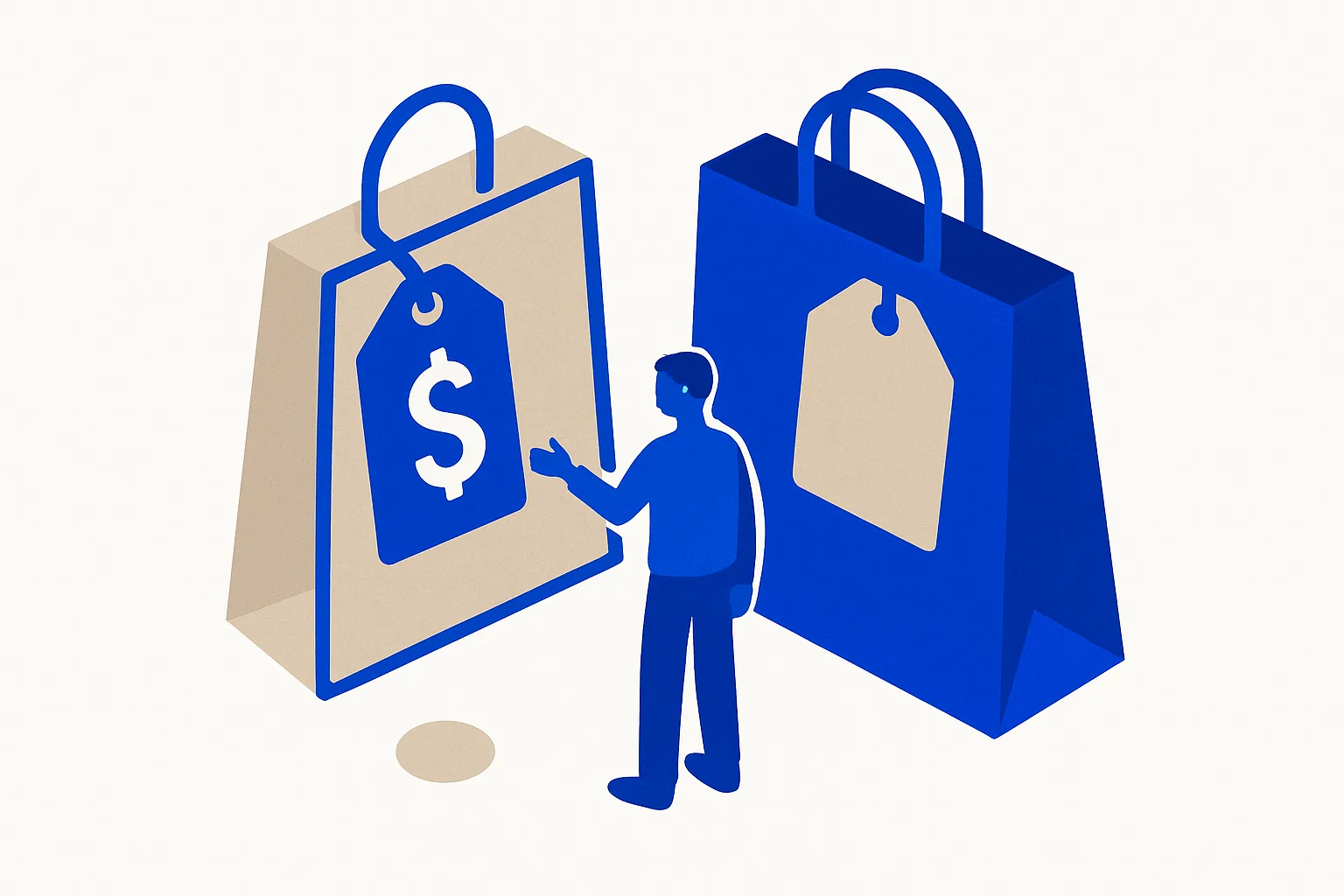
A shopper who can't find the price assumes the worst and moves on. Few first-time buyers will flag down staff to ask, asking feels like commitment, and impulse buys die in that moment of friction. Visible pricing is the cheapest conversion fix in your whole signage plan.
What "done" looks like
- Every displayed product has a visible price at the shelf edge or on the item
- A first-time visitor can price any item in five seconds, no staff needed
- The displayed price is the real total, with mandatory fees included where required by the relevant jurisdiction and sector
- Sale tags show the old price next to the new one, and match the register
How to do it
- Walk your floor as a stranger and list every item or service with no visible price.
- Put the price at the product, shelf-edge tags in the item's sight line, not a distant board.
- Show the all-in number. As a general good practice, fold mandatory fees into the displayed price, not a register surprise. Legal requirements vary by jurisdiction and sector.
- Make sale math instant, "was $18 / now $12" beats "33% off."
- Standardize one tag format so shoppers learn where to look, and reprint tags the day a price changes.
Common mistakes
- Leaving items unpriced to "start a conversation", most shoppers walk instead of asking
- Printing the price small beneath a big graphic, so the tag decorates instead of informs
- Letting stale tags drift from register prices, which reads as bait-and-switch
Real-world examples
- The FTC's Rule on Unfair or Deceptive Fees (effective May 12, 2025) requires live-event ticketing and short-term lodging sellers to show the total price, mandatory fees included, more prominently than any other figure. In those sectors, regulators treat hidden pricing as deception.
- Trader Joe's hand-letters signage for roughly 3,000 products and updates it as prices change; nothing sits unpriced.
From a founder's point of view
A visible price is a small act of respect: it lets the customer decide without asking permission. Hiding the number doesn't make a product feel premium, it makes the seller look unsure of it.
Rule of thumb
If a stranger can't find an item's price within five seconds without talking to anyone, that item is effectively not for sale.