HomeGet Started with Xero › Tidy your Xero chart of accounts fast

Tidy your Xero chart of accounts fast

Rename, archive, and recode Xero's default chart of accounts so every report reflects how your business actually earns and spends money.

Updated Jul 31, 2026 ·
Tidy your Xero chart of accounts fast

Why this matters

The chart of accounts is the skeleton of every report you'll read. Xero ships a generic default chart; left untouched, your P&L fills with vague lines that tell you nothing. Tidy it now, while volume is low — merging after a year of history is far messier.

What "done" looks like

  • Every account name means something to you at a glance
  • Accounts you'll never use are archived, not cluttering dropdowns
  • Revenue is split the way you think about the business (e.g., product vs. service)

How to do it

  1. Open Accounting → Advanced → Chart of accounts and read every line.
  2. Archive accounts that don't apply to your business — archiving keeps history but removes clutter from menus.
  3. Rename vague accounts into your language ("Software subscriptions" beats "General Expenses").
  4. Add the handful of accounts you'll actually manage against: your 2–4 revenue streams and your biggest cost drivers.
  5. Resist over-engineering — a few dozen active accounts is plenty for most small businesses; track fine detail with tracking categories, not hundreds of accounts.
  6. Review with your accountant; they'll map it to tax-return lines.

Common mistakes

  • Creating an account for every vendor or tiny expense type, making reports unreadable
  • Archiving system accounts Xero needs, like those tied to bank feeds or sales tax
  • Never revisiting: the chart should evolve when the business does

Real-world examples

  • Accountants commonly cite the bloated chart as a top cleanup request — dozens of near-duplicate expense accounts merged at year-end.
  • Xero's default chart is intentionally generic; its docs support importing a custom chart or an accountant's template precisely because most businesses adapt it.

From a founder's point of view

The chart of accounts is a reporting decision disguised as setup. Every account name is a question you're pre-answering: what do I want the P&L to tell me? Keep it short enough that every line earns a glance.

Rule of thumb

If you can read your P&L top to bottom and explain every line in one phrase, the chart is tidy. If two accounts could swap names and nobody would notice, merge them.

Our guides are researched and reviewed from multiple angles, including AI tools, primary sources, and experienced founders. They are general information, not professional advice. Please verify important details yourself or with a qualified professional.

Stop reading. Start checking it off.

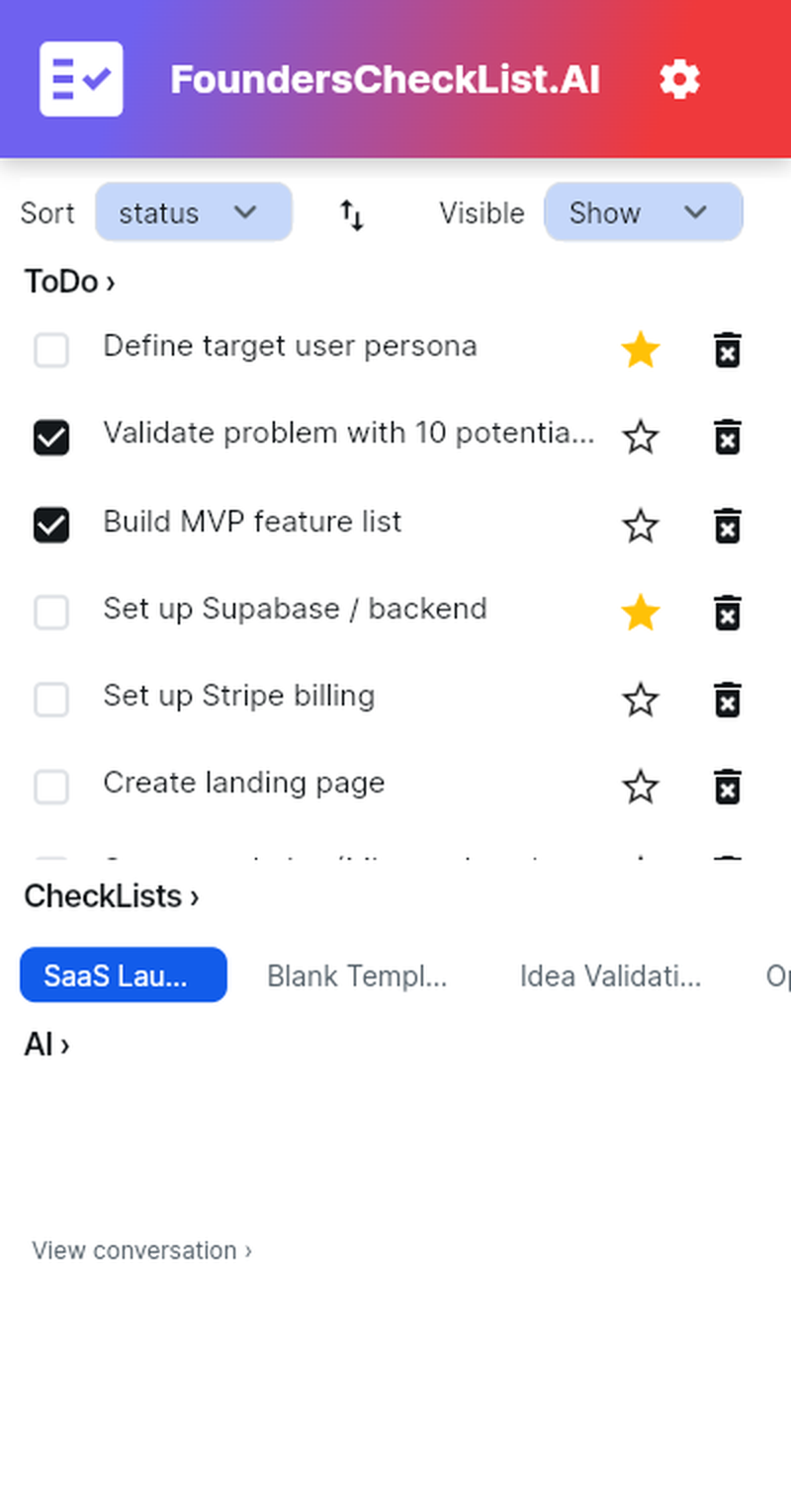
"Tidy your Xero chart of accounts fast" is a live step inside FoundersCheckList.AI, seeded into your checklist, tracked, and pushed forward by an AI coach that reads your real progress.

Don't just read it, check it off.

This step lives inside a working checklist, with an AI coach pushing you through it.

Start for free →
Free plan available · No credit card required
Keep exploring

Related across the site

News2026: 100% bonus depreciation permanent, Section 179 cap $2.56MIf you are buying equipment, machinery, vehicles, or off-the-shelf software, you can write off the full cost in year one instead of depreciating it over years — a meaningful cash-flow boost in a build-out year. Because 100% bonus depreciation is now permanent, you no longer have to rush purchases to beat a phase-out deadline, so time buys around actual business need. Coordinate Section 179 and bonus depreciation with your CPA to maximize the deduction against your taxable income.NewsIRS interest rate climbs to 7% for Q3 2026 underpayments and refundsUnderpaying quarterly estimated taxes now costs 7% annualized, so recompute your Q3 estimate (due Sept 15) and top up withholding to hit a safe-harbor payment and avoid the higher penalty.NewsRetail rents hit $24.79/sq ft in Q2 2026 as availability stays tight at 4.9%For a retail, restaurant, or storefront business, expect little bargaining power on rent and few vacancies in prime corridors, so budget higher occupancy costs and start your space search early. Strip-center closures mean some second-generation spaces (already built out) are opening up, which can cut your fit-out costs, worth targeting over raw new construction. Sun Belt metros still have the most new inventory if you need choice.ToolAcuity SchedulingAcuity Scheduling (a Squarespace product) is an online appointment-booking tool geared toward service businesses, handling bookings, intake forms, payments, and packages.ToolFreshBooksFreshBooks is cloud accounting and invoicing software aimed at freelancers and service-based small businesses, with strong time tracking, expenses, and client billing.ToolGustoGusto runs full-service payroll for US businesses, handling paychecks, tax filing, and direct deposit, plus benefits, onboarding, and contractor payments. It automates federal, state, and local payroll tax compliance.