Why this matters
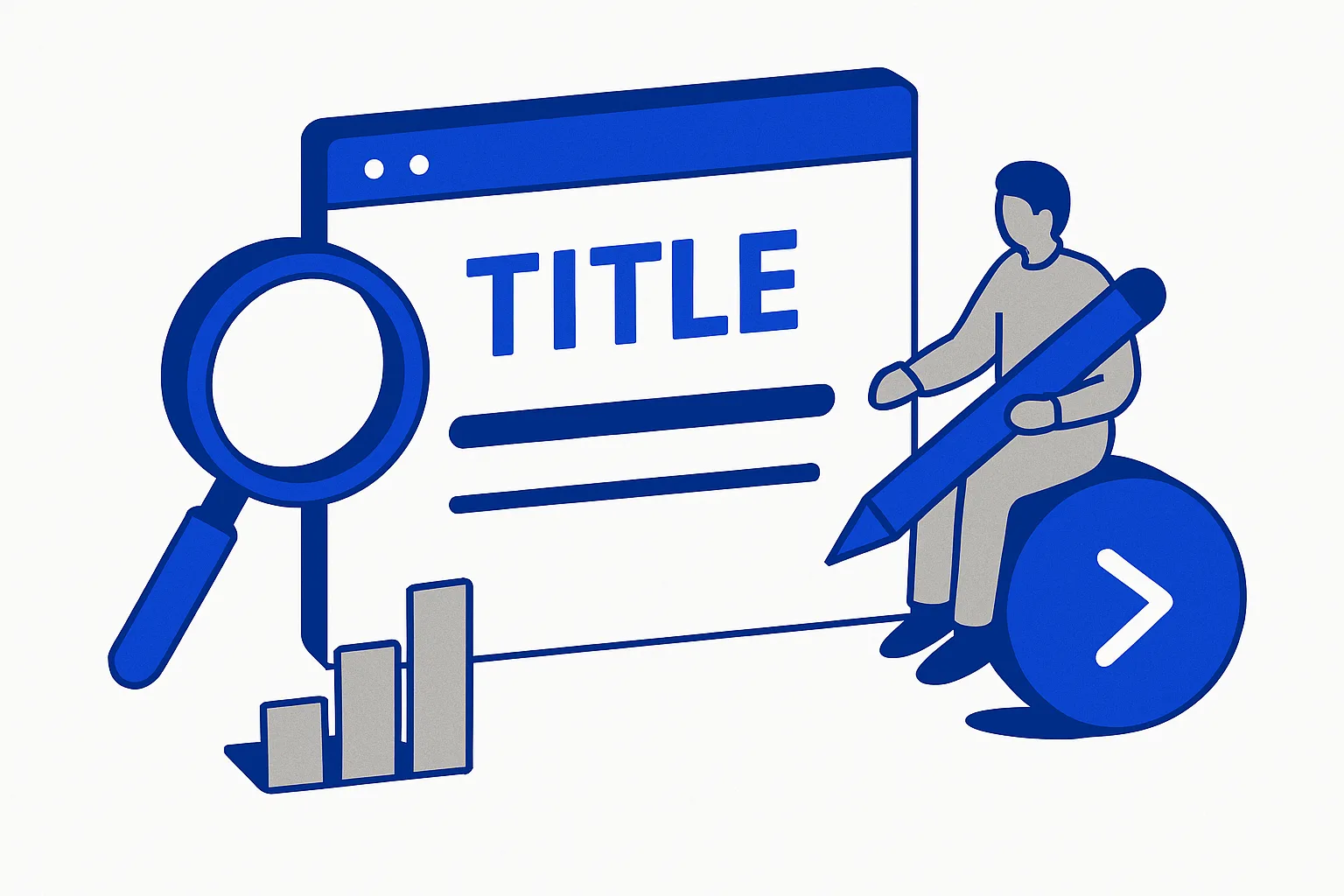
Your title and meta description are your ad in the search results. Even at position three, a clear, keyword-first title can win the click over a vaguer number one. Skip it and your pages compete titled "Home" against businesses that did it right.
What "done" looks like
- Every important page has a unique title under ~60 characters, main keyword near the front
- Each page has a meta description under ~160 characters that gives a reason to click
- Your homepage title says what you do and where, not just your brand name
- No duplicate titles across pages (check in Search Console or a free crawler)
How to do it
- List your key pages, homepage, service or product pages, top articles.
- Write titles keyword-first: "Emergency Plumber in Austin | BrandName" beats "BrandName, Welcome".
- Keep titles under ~60 characters so they don't get cut off in results.
- Write descriptions that sell the click, the keyword, one concrete benefit, one nudge ("Free quotes", "Open 7 days").
- Eliminate duplicates, every page gets its own title and description.
- Check the live results, search for your pages and see what actually displays.
Common mistakes
- Leading every title with your brand name, burying the keyword customers search
- Stuffing keywords ("plumber Austin plumbing best plumber TX"), Google often rewrites titles like these
- Leaving CMS defaults so five pages all say "Home"
Real-world examples
- Google has confirmed meta descriptions are not a ranking factor, but they influence whether searchers click your result.
- Google's documentation says it may rewrite title links it judges stuffed or inaccurate; clean, descriptive titles are more likely to display as written.
From a founder's point of view
The title tag is the most valuable sentence on the page: the market reads it before it ever sees your site. Treating it as an afterthought means paying to be found and then mumbling your pitch.
Rule of thumb
If a stranger reading only your title and description can say what the page offers and why to click, it's done. If they'd say "some company's website," it's not.