Why this matters
Bank loans to brand-new businesses are hard; SBA guarantees exist to change that math. The SBA doesn't lend directly here, it guarantees part of a bank's loan so the bank can say yes to a founder it would otherwise decline. Skipping these programs means competing for credit without the government's help.
What "done" looks like
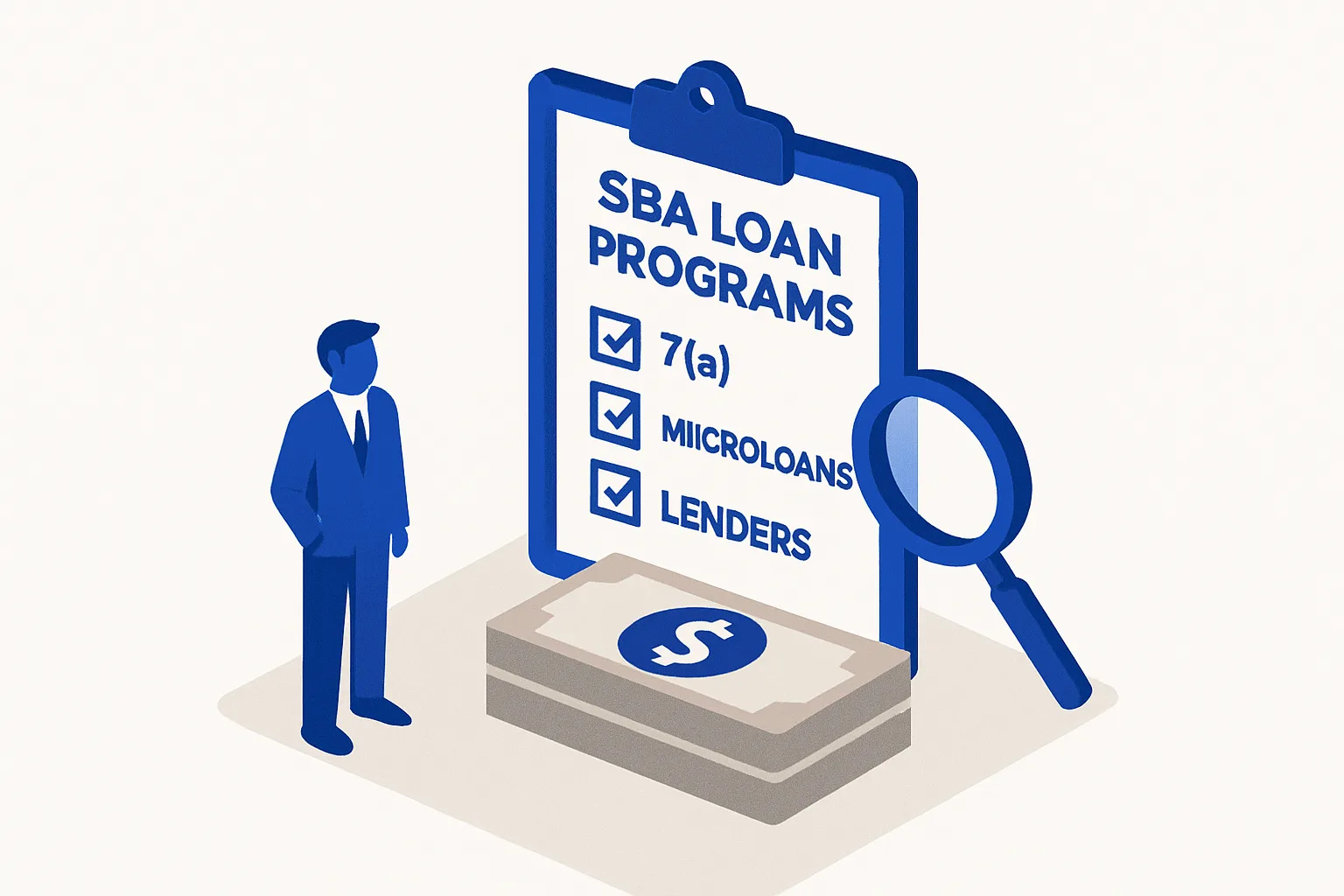
- You know which program fits your ask: 7(a) (up to $5 million) or a microloan (up to $50,000)
- You've spoken with at least one SBA-experienced lender or intermediary
- You know what lenders check: credit, equity injection, collateral, projections
- Your ask matches your build-out estimate and working-capital plan
How to do it
- Match the program to the ask: 7(a) is the general-purpose workhorse up to $5 million; microloans run up to $50,000 through nonprofit intermediaries.
- Use Lender Match on sba.gov to find participating lenders.
- Prefer experienced SBA lenders, ask any bank how many SBA loans it closed last year.
- Prepare the lender's checklist: personal credit, tax returns, a plan with projections, and your own cash in the deal, lenders want equity at risk.
Common mistakes
- Asking "what can I get?" instead of presenting a sized, documented request
- Assuming SBA means government money with no underwriting, banks still fully underwrite you
- Overlooking microloans because $50,000 sounds small when it matches the need
Real-world examples
- The 7(a) program, SBA's primary loan program, has a documented $5 million maximum, with the guarantee issued to participating lenders, not borrowers.
- SBA microloans are made through nonprofit community lenders at up to $50,000, and the SBA reports the average microloan is roughly $13,000, a fit for equipment or starting inventory.
From a founder's point of view
The guarantee changes who gets to play, not the standards of the game. A lender still wants clean credit, real projections, and founder cash at risk, the SBA just makes an honest, well-documented small ask fundable.
Rule of thumb
Size the loan to the plan, not the maximum, and if your ask is under $50,000, compare a microloan intermediary with suitable bank or SBA-backed options.