HomeFile Business Taxes with TurboTax › Check audit red flags before you file

Check audit red flags before you file

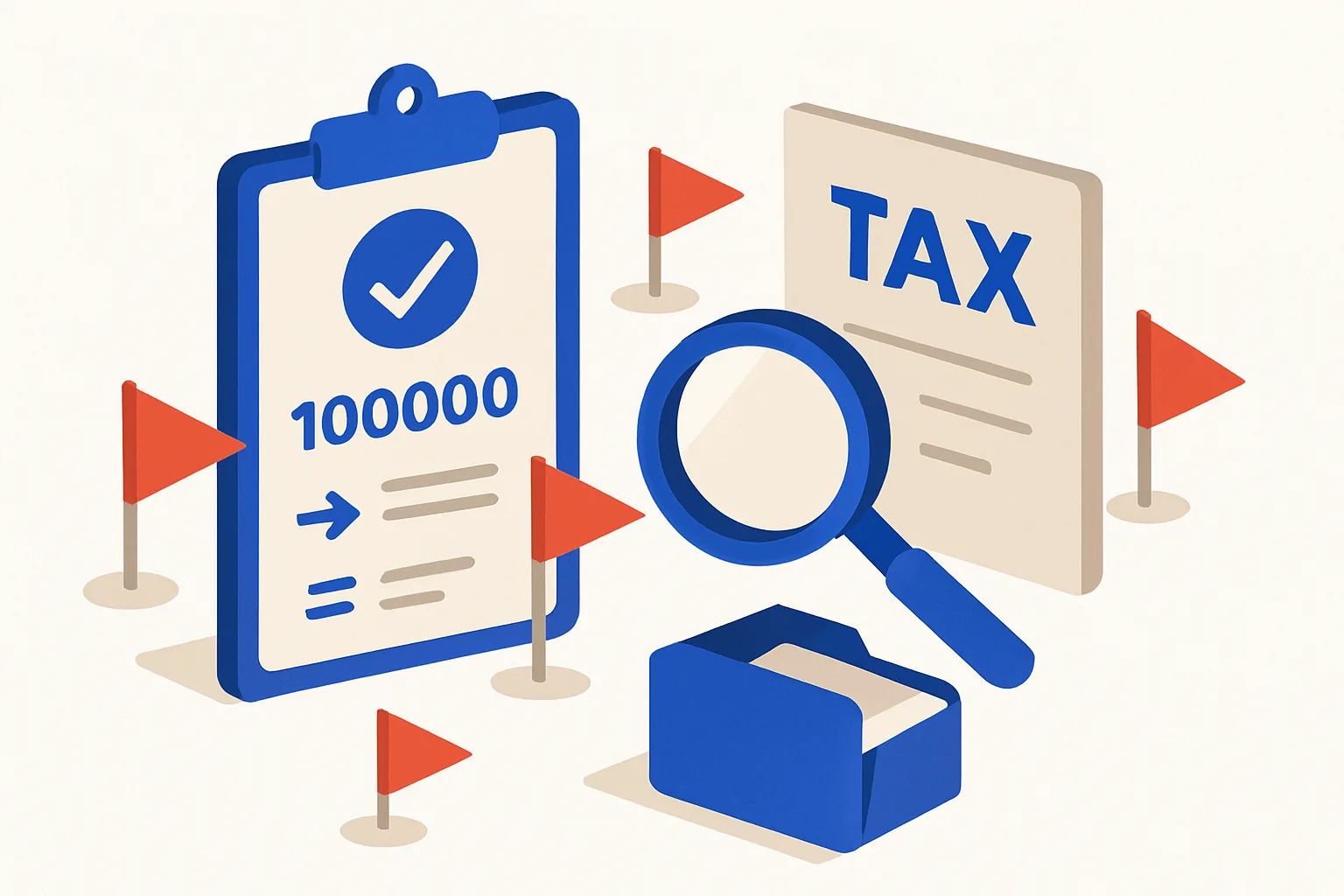
Round numbers, outsized deductions, and missing 1099 income are the classic triggers. A ten minute review before filing keeps your return boring, in the best possible way.

Updated Jul 31, 2026 ·
Check audit red flags before you file

Why this matters

The IRS doesn't pick returns at random — its systems score returns against norms and cross-match every 1099 filed under your SSN or EIN. Most trouble isn't a dramatic audit; it's an automated mismatch letter that costs you months of correspondence. A 15-minute review before e-filing prevents most of it.

What "done" looks like

  • Every 1099-NEC and 1099-K you received is reflected in reported income
  • No suspiciously round numbers in expense categories
  • Big deductions have documentation you could produce tomorrow
  • Home office, vehicle, and meals entries match actual records

How to do it

  1. Reconcile income against 1099s — the IRS matches these automatically; income below the sum of your 1099s is the classic trigger.
  2. Scan for round numbers — real books produce $4,912, not $5,000. Estimates read as estimates.
  3. Sanity-check deduction ratios — any expense line outsized relative to revenue needs receipts behind it.
  4. Review the risky categories — vehicle use, home office, meals, and travel draw the most scrutiny; make sure each matches a log, not a guess.
  5. Run TurboTax's final review and actually read the flags instead of clicking past them.

Common mistakes

  • Reporting only what hit your bank account and ignoring a 1099-K from a payment processor
  • Claiming 100% business use of the only vehicle you own
  • Rounding every expense category, which reads as invented numbers

Real-world examples

  • The IRS CP2000 "underreporter" program automatically mails notices when return income doesn't match third-party 1099 and W-2 data — no human audit needed to start one.
  • Schedule C businesses reporting losses year after year are a documented IRS focus area because of the hobby-loss rules.

From a founder's point of view

A red flag isn't a reason to skip a legitimate deduction — it's a reason to have the paper behind it. The goal isn't an invisible return; it's a return where every flagged line has a boring, documented answer.

Rule of thumb

Claim everything you can document; claim nothing you'd struggle to explain in one sentence with a receipt in hand.
Our guides are researched and reviewed from multiple angles, including AI tools, primary sources, and experienced founders. They are general information, not professional advice. Please verify important details yourself or with a qualified professional.

Stop reading. Start checking it off.

"Check audit red flags before you file" is a live step inside FoundersCheckList.AI, seeded into your checklist, tracked, and pushed forward by an AI coach that reads your real progress.

Don't just read it, check it off.

This step lives inside a working checklist, with an AI coach pushing you through it.

Start for free →
Free plan available · No credit card required
Keep exploring

Related across the site

Case studyReginald F. LewisTLC Beatrice InternationalNews$20,000 instant asset write-off to become permanent from 1 July 2026For an Australian founder running a company under $10M turnover, this turns the write-off from a year-end scramble into an ongoing cash-flow lever, so you can time laptop, tooling and equipment purchases across the whole year and expense each item under $20,000 immediately. Confirm each asset is installed ready for use in the year you claim, and keep watching for the enabling legislation since the permanent rule is not yet law.News2026: 100% bonus depreciation permanent, Section 179 cap $2.56MIf you are buying equipment, machinery, vehicles, or off-the-shelf software, you can write off the full cost in year one instead of depreciating it over years — a meaningful cash-flow boost in a build-out year. Because 100% bonus depreciation is now permanent, you no longer have to rush purchases to beat a phase-out deadline, so time buys around actual business need. Coordinate Section 179 and bonus depreciation with your CPA to maximize the deduction against your taxable income.NewsAEWV minimum pay rises to NZD $23.95/hr from 1 April 2026Any founder hiring a migrant through the AEWV scheme must ensure offer letters and job ads meet the $23.95/hr floor from 1 April 2026 or risk visa refusal. Budget wage costs against the new rate before advertising, and note the reduced 2-year work-experience requirement makes overseas hires easier than in prior years.ToolAcuity SchedulingAcuity Scheduling (a Squarespace product) is an online appointment-booking tool geared toward service businesses, handling bookings, intake forms, payments, and packages.ToolFreshBooksFreshBooks is cloud accounting and invoicing software aimed at freelancers and service-based small businesses, with strong time tracking, expenses, and client billing.