Why this matters
Buildout is usually the biggest cost between signing a lease and opening the doors, and the easiest to underestimate. If you sign first and price the work later, you lose all leverage on the tenant improvement (TI) allowance, and every surprise behind the walls comes straight out of your runway.
What "done" looks like
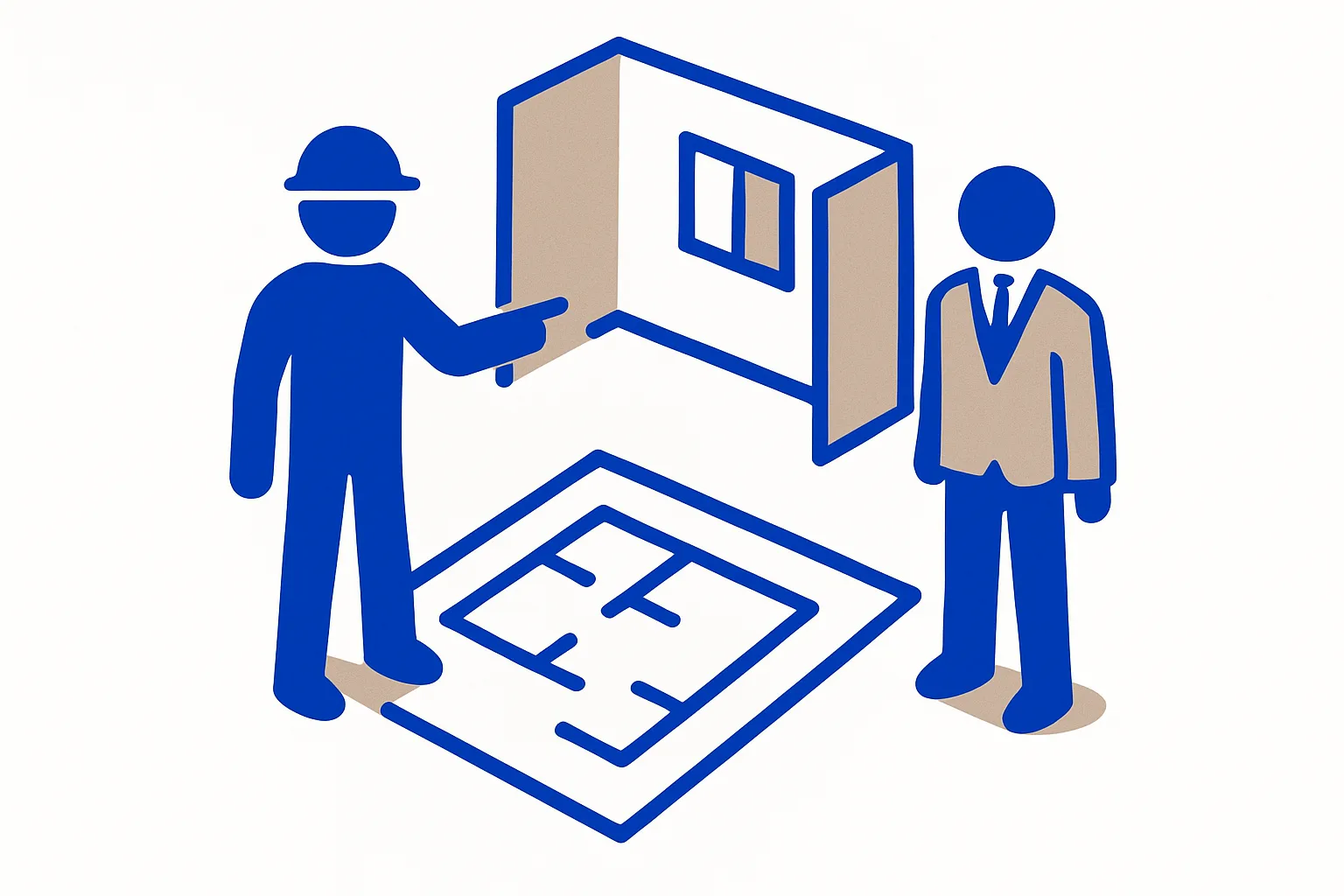
- A licensed contractor has walked the actual space with you, before signing
- You hold a written line item estimate (HVAC, electrical, plumbing, ADA, finishes)
- A 15 to 20% contingency sits on top of the estimate
- The total feeds directly into your LOI ask for TI allowance and free rent
How to do it
- Shortlist 2 to 3 contractors with experience in your use type. Restaurant, retail, and office buildouts price very differently.
- Walk the space together and ask about HVAC capacity, electrical panel size, plumbing runs, and venting or grease trap needs.
- Request line item estimates, not one lump sum, so you can cut scope later.
- Add a 15 to 20% contingency. Older buildings hide problems in walls and floors.
- Carry the number into the LOI (next step) as your TI allowance and free rent ask.
Common mistakes
- Budgeting from an internet per square foot average instead of a walkthrough of your space
- Forgetting soft costs: permits, drawings, utility upgrades, deposits
- Trusting the landlord's "vanilla shell" description instead of your own inspection
Real world examples
- Some industry guides cite rough restaurant buildout benchmarks of $150 to $500+ per square foot, depending on kitchen scope, but costs vary greatly by market and project. Get current local bids for your space.
- Some industry guides show large differences in TI allowances between basic office space and restaurant conversions. Treat these as rough local benchmarks and obtain current local bids before you negotiate.
From a founder's point of view
The estimate is really about leverage. A founder holding a contractor's line item bid can negotiate TI allowance and free rent from facts; a founder who guessed finds out mid build that the runway is gone.
Rule of thumb
No contractor walkthrough, no signature, and a budget without a 15 to 20% contingency is not a budget.