Why this matters
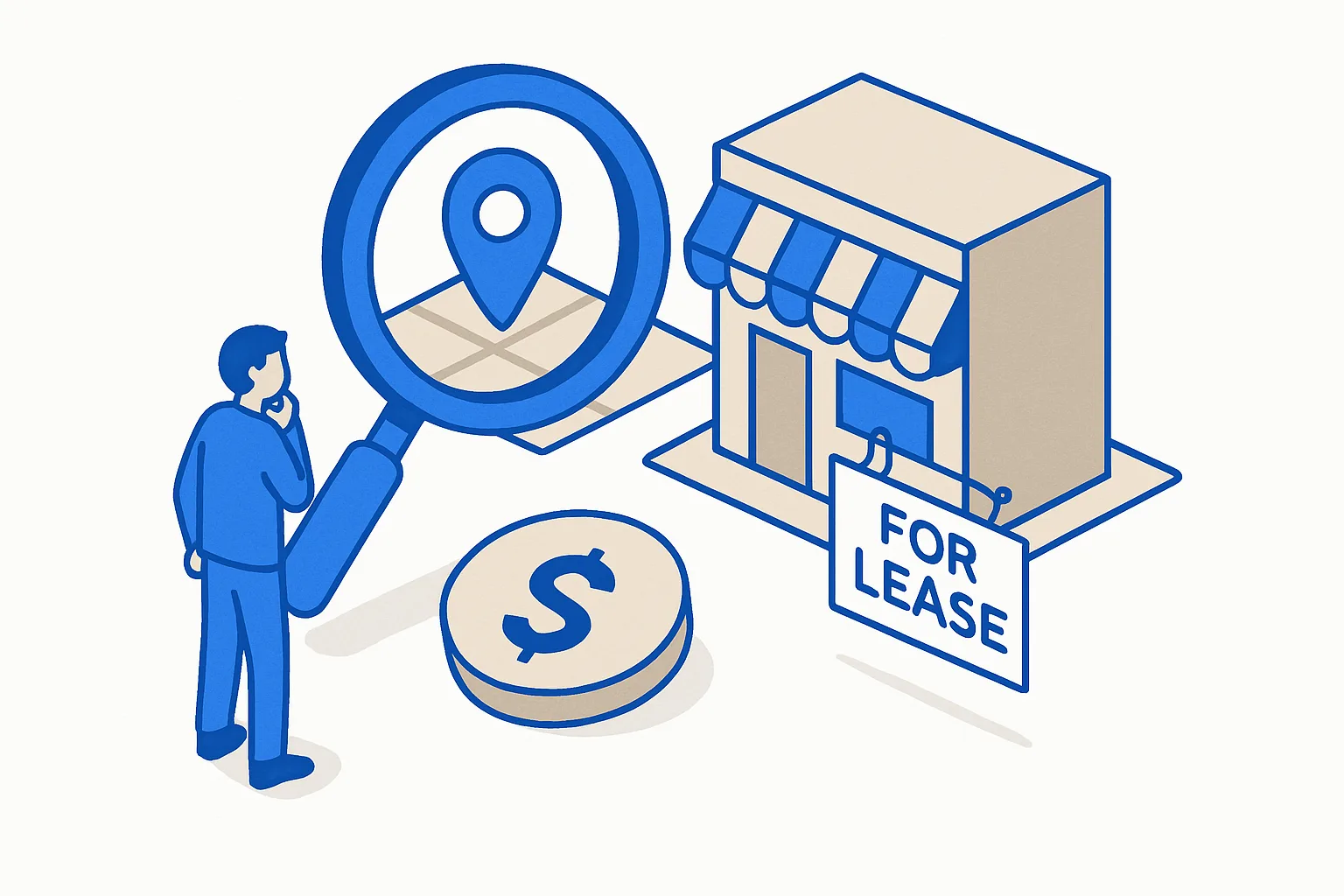
Rent is the fixed cost that never has a slow month, and a bad lease is the hardest mistake to undo. You may sign for three to ten years based on a decision made in weeks. For businesses that rely on customers walking in, such as restaurants and salons, location drives revenue more than almost any marketing you will ever do. The wrong corner at the wrong rent quietly kills otherwise good businesses.
What "done" looks like
- A signed lease with rent at a sustainable share of projected revenue, roughly 6% to 10% for most storefronts
- Foot traffic, parking, and visibility verified in person at your actual busy hours
- Zoning and construction requirements confirmed before signing
- Key terms understood: rent escalations, personal guarantee, and who pays for repairs
How to do it
- Set your rent ceiling first. Work backward from realistic revenue. If rent needs a perfect month to cover, walk away.
- Shortlist three to five spaces and visit each in the morning, at midday, and in the evening. Count actual foot traffic instead of taking the broker's word.
- Check zoning, utilities, and permits for your use. A space never used for your kind of business may need construction costing tens of thousands.
- Negotiate more than rent: free rent during construction, a tenant improvement allowance, and a shorter initial term with renewal options.
- Have a lawyer read the lease. A few hundred dollars is a small cost against a multiyear obligation. Push back on unlimited personal guarantees.
Common mistakes
- Falling in love with a space and rationalizing rent the numbers do not support
- Signing a long lease with a full personal guarantee as an unproven first timer
- Underestimating construction, as overruns can materially increase opening budgets and delay opening
Real world examples
- Starbucks' real estate team models foot traffic using pedestrian and vehicle counts, transit ridership, and anonymized mobile location data before committing to a lease. It favors sites with heavy daytime traffic and clusters near offices, campuses, and transit.
- Quick service restaurant operators commonly use rent as a percentage of sales as a site guardrail, targeting occupancy costs around 6% to 8% of gross sales so a pricey "perfect" location does not quietly sink the unit economics.
- The general lesson for a first location: match the spot to how your customers actually arrive, whether they walk by, drive by, or make it a destination, rather than choosing whichever storefront feels most impressive. Budget for the insurance your landlord will likely require, too.
From a founder's point of view
A lease is the one early decision that's genuinely hard to undo. You can change a menu or a price overnight, but you're committed to the address for years. The trap is falling for a beautiful space you can't quite afford or a cheap one nobody walks past. It's worth sitting outside a shortlisted spot at different hours and literally counting the people, because a signed lease turns optimism into a fixed monthly bill.
Rule of thumb
Keep monthly rent within your chosen occupancy cost target as a percentage of projected monthly gross sales, roughly 6% to 10% for most storefronts.