Why this matters
Interest fades fast after the room empties. A follow-up the next day keeps you top of mind while the conversation is still warm; waiting a week can let momentum fade. It's also your chance to answer the questions you fumbled live.
What "done" looks like
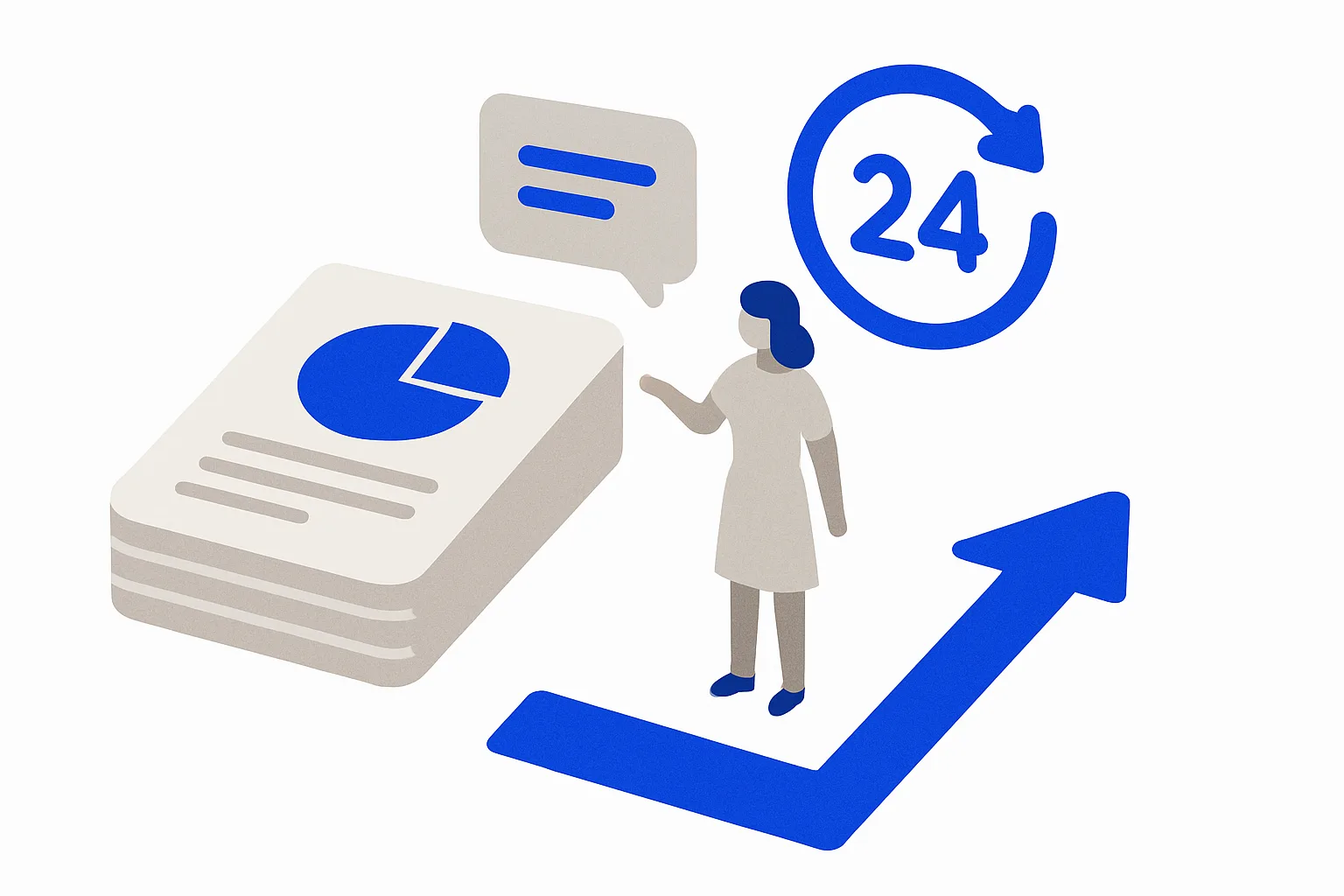
- A thank-you email sent inside 24 hours
- The deck or one-pager attached
- Clear answers to every question you couldn't fully answer
- A specific proposed next step with a date
- The message is short and skimmable, not a wall of text
How to do it
- Send it the same day if you can. Draft the email before you leave the meeting; polish and send that evening or first thing next morning.
- Attach the materials. Include the deck, financial summary, or one-pager they'd need to review internally.
- Close the open loops. Answer the two or three questions you deferred, with numbers if you promised them.
- Propose the next step. Suggest a specific call time or ask what they need to move forward.
- Keep it tight. Five sentences beats five paragraphs; make the attachments do the heavy lifting.
Common mistakes
- Waiting days until the momentum and their memory are gone
- Sending a generic thank-you with no answers and no next step
- Forgetting to attach the very deck you promised
Real-world examples
- Investors often ask for the deck "to share with partners," so sending it promptly keeps you in the pipeline.
- A same-day recap email is standard practice in B2B sales precisely because it confirms terms while they're fresh.
From a founder's point of view
Follow-up is where deals are quietly won or lost. The pitch gets you noticed; the next-day email proves you're reliable and easy to work with. Founders underestimate how much a prompt, organized follow-up says about how they'll run the business.
Rule of thumb
If the sun sets twice before you follow up, you've already cooled the lead.