Why this matters
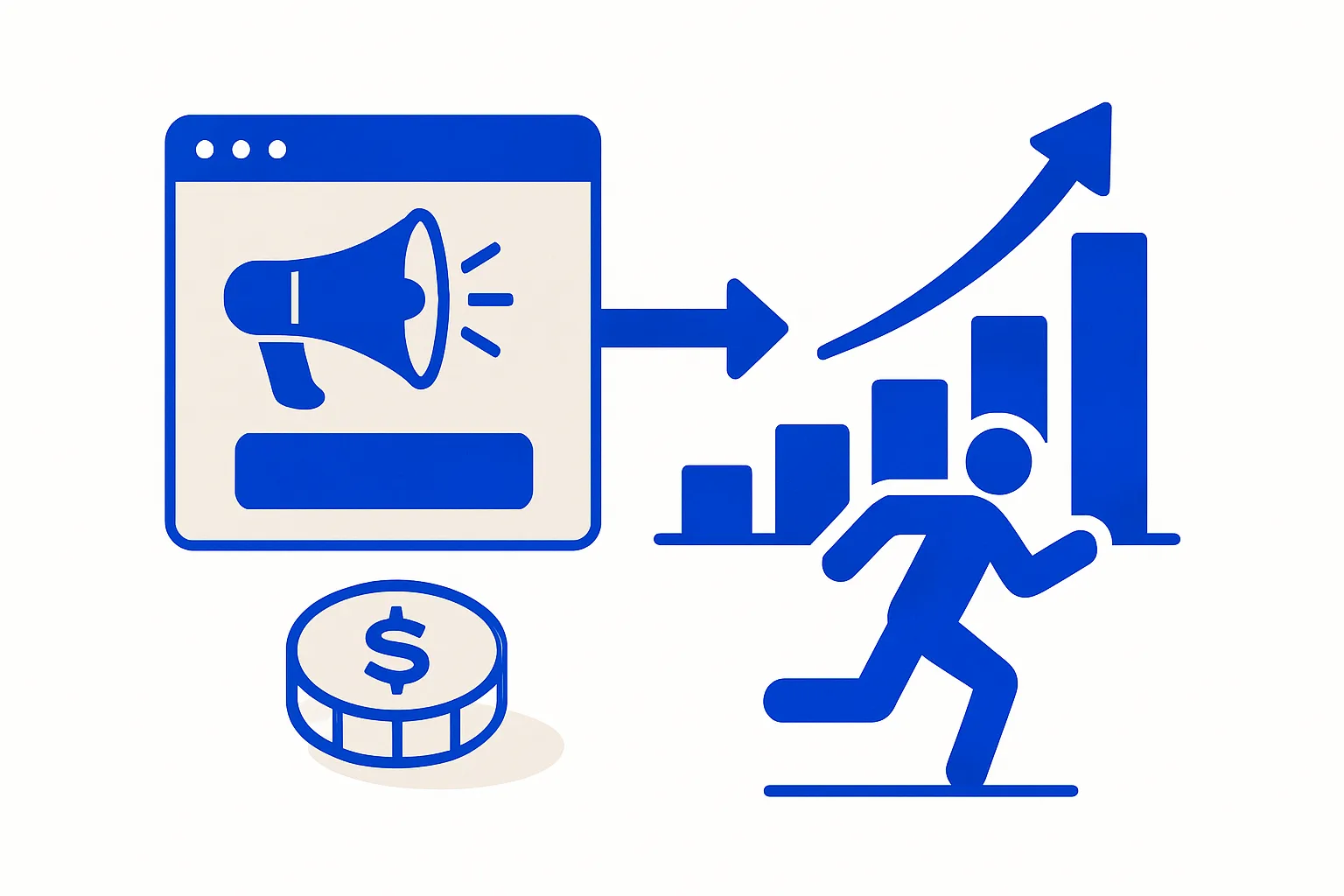
Earlier steps in this checklist lean on free channels. A small paid test answers the one question free channels can't: what does a customer cost when you pay for attention? Skip it and you'll either scale ads blind later, or avoid paid forever and leave a working channel on the table.
What "done" looks like
- One channel picked, not three
- One offer, one audience, one landing page, written down before spending
- A fixed budget ($200, $500) spent over 2 to 4 weeks
- Tracking that ties each lead or sale to the test
- A written result: cost per customer vs. your gross margin
How to do it
- Pick one channel where your buyers already look: Google Search for people hunting a fix, Meta/Instagram for discovery, a local sponsorship for foot traffic.
- Write one offer with a single call to action.
- Set a hard budget and end date. A directional test of $200 or $500 over 2 to 4 weeks can be useful, but too few conversions may make the result inconclusive.
- Install tracking before spending: conversion tracking, a promo code, or a "how did you hear about us?" field.
- Let it run for at least two weeks; daily fiddling ruins the data.
- Compute cost per customer and compare it to margin. That number drives the "double down" step ahead.
Common mistakes
- Splitting $300 across three channels, so nothing gets enough data to mean anything
- Judging by clicks and likes instead of cost per lead or sale
- Killing the test on day 3, or letting an obvious loser run for months
Real world examples
- Dropbox measured early paid search at $233 to $388 to acquire a customer for a $99/year product. That test told them to drop ads and build their referral program instead.
- Google Ads has no minimum spend, so a tightly capped daily budget is a real product feature, not a workaround.
From a founder's point of view
A paid test isn't a bet that ads will work. It's buying a number. Cost per customer is the most useful figure in a marketing budget. Even a test that proves a channel is too expensive is cheap, because it prevents a much bigger waste later.
Rule of thumb
If you can't say "one channel, one offer, $X spent, $Y per customer," you ran ads. You didn't run a test.