Why this matters
The moment you file this year's return is the moment to lock in next year's payment dates. Miss a quarterly deadline and the IRS charges an underpayment penalty that accrues until you pay, even if you end up due a refund at filing.
What "done" looks like
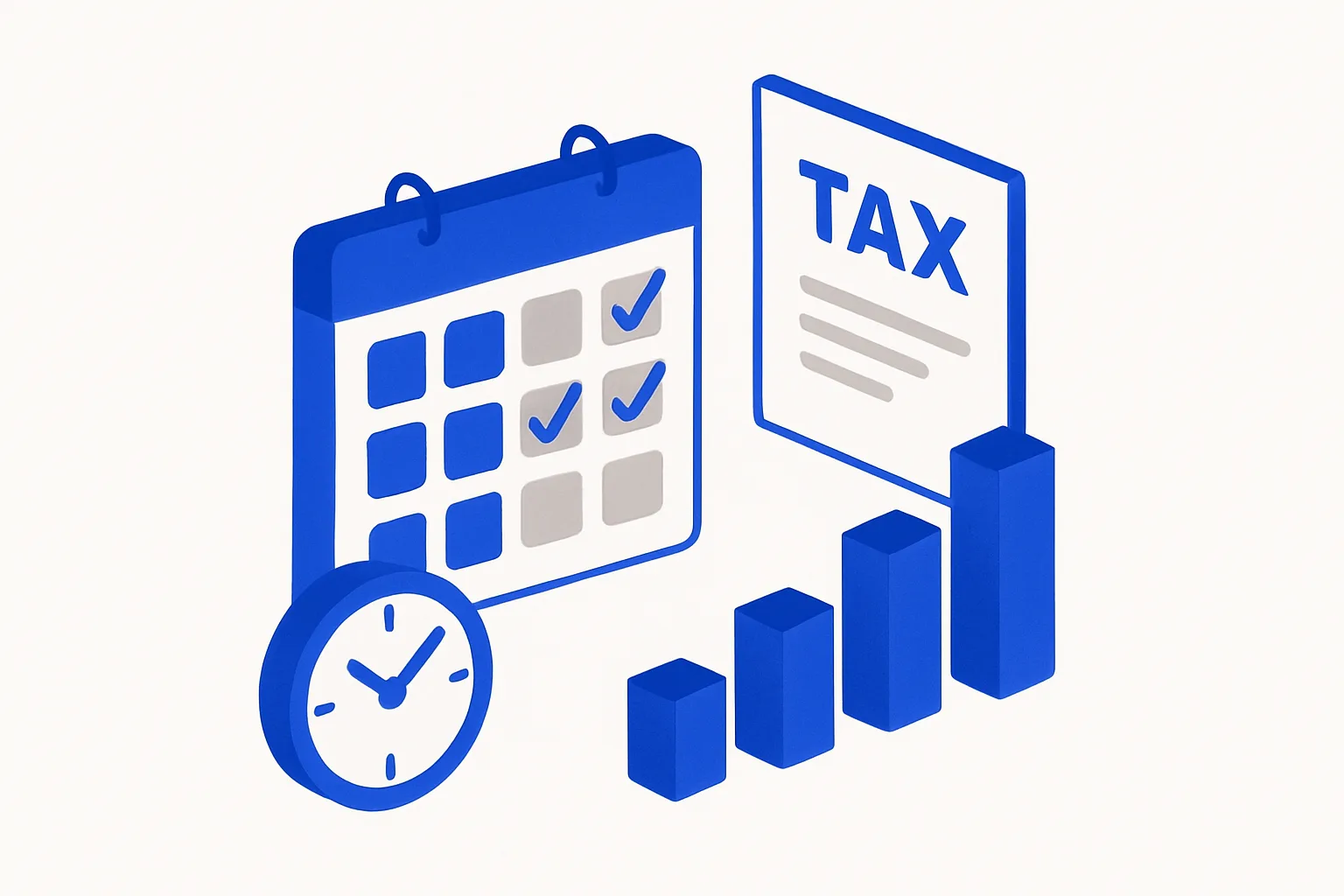
- Four calendar entries with reminders a week before each due date
- An amount attached to each date, from TurboTax's 1040-ES vouchers or safe-harbor math
- A funding plan, which account the money comes from
- State estimated dates added too, if your state requires them
How to do it
- Calendar the federal dates now: April 15, June 15, September 15, and January 15 of the following year (next business day if a weekend or holiday).
- Save the 1040-ES vouchers TurboTax can generate from this year's numbers.
- Use the general safe harbor if income is unpredictable: make timely required installments based on 100% of last year's tax, or 110% if AGI topped $150,000, reduced to $75,000 if married filing separately. Special rules apply, so check current IRS guidance or ask a tax professional.
- Set up IRS Online Account or EFTPS so each payment takes two minutes.
- Automate the funding: move a fixed percentage of every deposit into a tax sub-account so the cash exists when the date hits.
Common mistakes
- Assuming the payments are evenly spaced quarters. June 15 can surprise first-time filers.
- Forgetting the January date because it lands in a new calendar year
- Calendaring the dates but never deciding where the money comes from
Real-world examples
- The IRS schedule is genuinely uneven: the four "quarters" are 3, 2, 3, and 4 months long, which helps explain why the June deadline can be missed.
- TurboTax can prepare next year's Form 1040-ES vouchers automatically from this year's return, a documented feature that filers may click past.
From a founder's point of view
Quarterly taxes are the first recurring obligation where nobody invoices you, no bill arrives, and the penalty accrues silently. Treating the four dates like payroll, with cash set aside in advance, turns a dreaded scramble into a non-event.
Rule of thumb
If the four dates aren't on your calendar with amounts and a funding source by the time you file this year's return, you haven't finished filing.