Why this matters
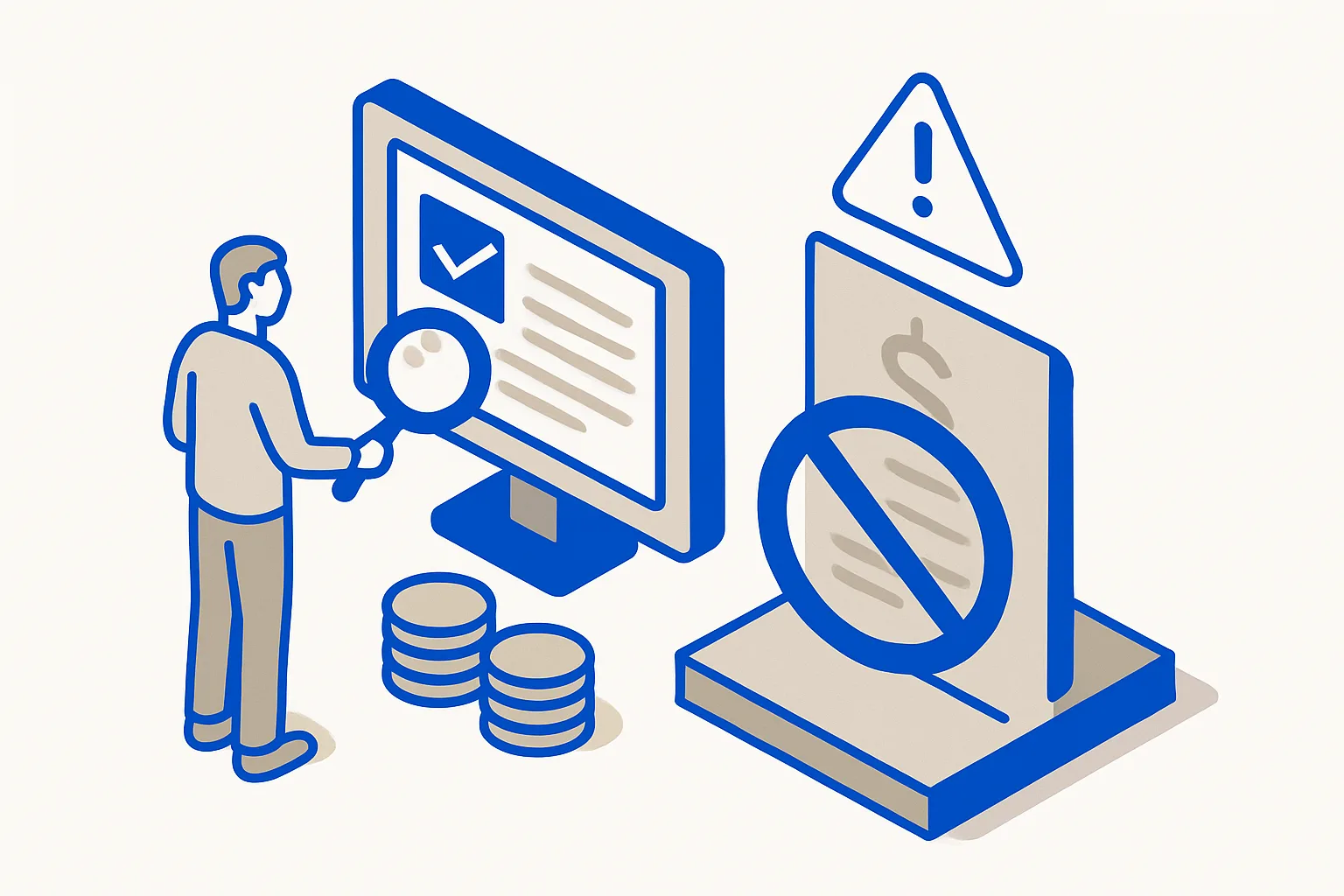
Grant search has the worst signal-to-noise ratio in small business funding: real programs exist, but they're buried under scams and recycled "grant lists." Federal money almost never funds starting a business; corporate and state grants exist but are competitions.
What "done" looks like
- You've searched Grants.gov and confirmed which (few) federal programs fit
- You have a shortlist of 2-3 legitimate state or corporate grants with live deadlines
- Each application has a time cost you accepted deliberately
How to do it
- Start at Grants.gov for federal listings, expect research (SBIR/STTR), nonprofit, and industry-specific programs, not general startup money.
- Check your state's commerce or economic development site for state small business grants, these fit more often than federal.
- Add private competitions, such as WomensNet's active Amber Grant.
- Verify on the program's own site, deadline, eligibility, past winners, before writing a word.
- Timebox each application and reuse core answers.
Common mistakes
- Paying for grant lists or "guaranteed grant" services, a classic scam pattern
- Spending weeks on federal programs that exclude for-profit startups
- Chasing every tiny micro-grant while a loan or customer revenue would move faster
Real-world examples
- The SBA states plainly that it does not provide grants for starting or expanding a business.
- WomensNet's Startup Grant is an active monthly competition awarding $10,000 to a women-owned startup.
- WomensNet's Amber Grant, running since 1998, awards documented $10,000 monthly grants to women-owned businesses, plus larger year-end awards.
From a founder's point of view
Grants are lottery tickets with an essay attached. The disciplined move is a short list from real sources, a hard timebox, and zero emotional budget. The business plan can't depend on winning one.
Rule of thumb
Verify every grant on the funder's official site before applying, and anyone selling "guaranteed" grant money is selling you.